Working at the orphanage in Rabat

Last Friday, I spent my morning working at the children’s orphanage because the women’s center where I’m teaching English is closed on Fridays.  The orphanage was challenging, but I’m grateful for the placement I received, as working there this morning was very difficult for me. The room I worked in was large, bright, and immaculate, and had probably 10 or so cribs and a large playpen in the center of the room, where two of the bigger boys were situated. Initially, I assumed that the children were toddlers, maybe the oldest 5 or 6, but once I started feeding them, I saw that they all had their permanent teeth (they were all fed some formula, but the bigger two in the playpen, who were spoon-fed milk-soaked bread.   I later learned that most were in the pre-teen to young teenager age group, although there were a few that even the workers knew exactly how old they were.  I must admit to being a bit surprised when I saw pubic hair on one of the girls whose diaper was being changed next to me.  That told me a great deal about their age.  Their tiny bodies were contorted, and their limbs were bone-thin. When I picked a few of them up to move them, they were hard to carry, as their bodies didn’t conform to mine as I was used to, but rather were stiff and unyielding.  I was also terribly afraid I would hurt them, so I was being overly cautious.

Illegitimate children in Morocco are considered outcasts, non-people or bastards, and given that unmarried sex is illegal in Muslim countries, the stakes are very high for a woman who finds herself pregnant without a father who is willing to marry her and accept the responsibilities.  There doesn’t seem to be any repercussion towards the man who gets the woman pregnant, but rather, it is entirely the burden for the woman to carry.  Although recent legal reform says that an unmarried woman may register her child to make them available for social programs, with the father’s consent or not, this is not a law that seems to be followed, and women still seem to be paying the price.  This is why so many children end up in orphanages, as they are literally the babies who are “thrown away” by the mother to protect herself. The children at this orphanage are totally dependent upon others for their care, and from what I saw, couldn’t do anything on their own short of crying to indicate distress.  During my time there, I was able to go up to the 3rd floor, where the youngest babies reside.  They were absolutely adorable, and most of them looked healthy and would be considered “adoptable.”  The adoption standards are rigid, though, as only a Muslim can adopt a baby in Morocco, and even though they may bring them up as they choose (in a Muslim family), they must promise to keep the baby’s given Arabic name.  The whole process can take years, and there’s a reluctance to adapt to families living outside of Morocco, even if they are Moroccan.  The children with physical limitations, like the ones I was working with, aren’t considered adoptable, and even if there was someone who wanted to adopt them, the orphanage is reluctant, fearing that the families would not be able to handle the burden and would leave the child once again.

Initially, I wasn’t sure what my role was going to be once all of the kids had been fed (they were
bathed and in clean clothes before we arrived), but it didn’t take long to realize that once their bellies were full, all these kids wanted was some attention and physical touch.  A simple caress of a cheek with gentle words or singing was enough to calm them down, and more than once, I was able to get a few smiles or a hand that would reach through the crib bars to touch me.  I had to keep reminding myself that they weren’t toddlers, but children, because they fit in a normal-sized crib.  There was one girl who tugged at my heart and with whom I spent most of my time. She had beautiful brown curls and huge brown eyes and was so contorted that her little body barely took up half of the space in the crib.  She was wearing a child-sized, red “ROCK THE BAND” tee shirt that made mention of a music festival in Buffalo, NY.   My reaction vacillated between sad, as it seemed to make her appear even more vulnerable than she already was, and happiness, simply because of the irony of it.  That being said, I did tell her several times that she rocked the shirt, and for some reason, that became a connecting thread for us, even though she, of course, had no idea what I was saying.  My tone, however, I’m sure she understood.
As much as I’ve enjoyed learning about the history of Morocco and the traditions of its people (Muslim lessons will begin later this week), I’m finding that I know a great deal about a culture through observing how its most vulnerable are treated.  I saw this at Mother Theresa’s in Perú and again at the orphanage in Rabat.  Because of medical issues, which I’m sure are a result of poor prenatal care coupled with difficult births, most likely without medical assistance, most of these children will have a significantly shortened life span.  It was genuinely touching to see the women at the orphanage work tirelessly and with such love to ensure that these children have the best life possible.  All of their cribs were made up with colorful bedding and had at least one stuffed animal propped up where it was visible to the child.  The clothes they wore were clean and gender-specific (which was a good thing, as I was having a hard time determining the gender of a few of them).  I was deeply touched by the love I saw in that room.  When I went upstairs to peek in the baby’s room, I had to wonder about the ones that may not ever get adopted and will end up spending their entire life in the orphanage, and what they could become if raised in the protective embrace of a loving family.  The staff does the best it can, but there are not enough employees or volunteers to give these children the attention and the touch that they are so hungry for. Given the time I’ve had to process this initial visit, I’m sure my time at the orphanage this Friday will be a bit easier, but that’s not to say it won’t come with a tear or two.  Gratitude.  For so much.  I can’t begin to express….

There are no photos allowed inside the orphanage to protect the children, but I did manage to take a picture of myself outside the building, complete with the jacket they like us to wear to protect our clothing.

How many Moroccons does it take to get someone out of a bathroom with a jammed lock?

How many Moroccans does it take to get someone out of a locked bathroom? Sadly, I know that answer… it was four.  One to shout directions to me in Arabic from the other side of the door, one to start tearing the jam down with a crowbar, and two to watch.

I spent the weekend with three of my housemates on a jaunt to the Sahara to ride camels and sleep under the stars… well, not exactly under the stars, as we were in a tent, but pretty darn close.  It’s hard to describe how magical the camel ride was and the sleeping out in the desert in the middle of nowhere, but I have to admit, when I returned to the house tonight, the first story that came out was me getting stuck in the small bathroom in my hotel room.

Because it was a 10-hour drive from Rabat to where we would ride camels and camp in the Sahara, we arrived pretty late, so we stayed in a local hotel, where we would board our camels the following day for our trek to the campsite.  The bathroom door lock was not functioning properly from the beginning, and I wouldn’t have even used it except that it was the only way the door would shut, and I felt it was a courtesy to Mimi, my roommate for the evening.

Shortly after breakfast, I returned to the room to get my things, used the bathroom to get ready for the trek, and when I tried to unlock the door, it wouldn’t budge.  I fiddled around with it for a few minutes when Simone (one of the other girls I was traveling with) knocked on the door to tell me they were ready to go.  When I told her I couldn’t get out, I heard her go down the hall shouting “….uh….we’re going to need some help here…”  And that is when the four Moroccan men showed up and started shouting directions to me in Arabic.  I wasn’t having any luck explaining to them that it wasn’t the door handle that was jammed, but the lock below it (honestly, I don’t know why I said anything, as they couldn’t understand a word I was saying).    I was in there a good 15 minutes before I saw a crow bar rip apart the door jam to free the lock.
I was starting to panic a bit, as the bathroom was very small and I wasn’t sure exactly how they were going to free the lock, short of knocking the door down.  When the door was finally opened, and I saw the damage to the jam, I looked at them with a thankful, yet oh so apologetic look, and they just shrugged their shoulders and smiled as if to say…”No problem, it happens all the time…” (which I’m sure is not far from the truth).

I was leery of bathroom doors with funky locks the rest of the weekend… and that included most of the ones I saw.  Between trying to hold the door shut with my foot and leaning forward to keep it shut with my hand, I decided the easiest (and safest) route was to let it swing open and forgo privacy, which I did. Fortunately, it seemed to hit the public bathrooms, not the others.

After a weekend of magic in the desert with a camel trek, a full moon, and a night under the stars, honestly, it was the getting locked in the bathroom story that came out first to my housemates once home.
The rest of the weekend, I’m savoring and will share in pieces…

Casablanca has Rick’s Cafe, the 2nd largest religious building in the world and STARBUCKS!

We were without internet in the house for the past two days, and once over the initial “now what?”… I have to admit, it was nice.  Something I remember fondly from my time volunteering in Perú is conversation.  The four 20-somethings in the house did not share that sentiment. Not knowing what to do with their hands, their minds, or their attention, they left the house for some nightlife.  Dee Dee, Mimi, and I sat around and chatted… something I’ve missed. But now it’s back and we’re all connected, especially the 20-somethings, who appear to have regained their will to live.

This morning, I took the train to Casablanca, a little over an hour away, with Mimi and Dee Dee. Our first sense of accomplishment came early, as we successfully navigated the prompts on the machine where we purchased our tickets.  Suffice it to say, it took several attempts, but when tickets appeared (and even in the right place) and change popped out of the orange slot on the machine, there was a unanimous sigh of relief.  People are very friendly and helpful here, although that help usually comes in the form of French, not English.  Few (I can count on one hand) have been able to offer assistance in English, but I expected that.

The station and the train were both immaculate and modern, making for a nice, easy ride. The station in Casablanca was a beautiful surprise, almost like a large shopping center, although most of the stores were closed.  Today is a national holiday for the Moroccans, which is why we weren’t working and could travel.  There are many national holidays in this country, and we will have next Tuesday off as well.  Today was the celebration of Morocco’s takeover of Western Sahara from Spain.
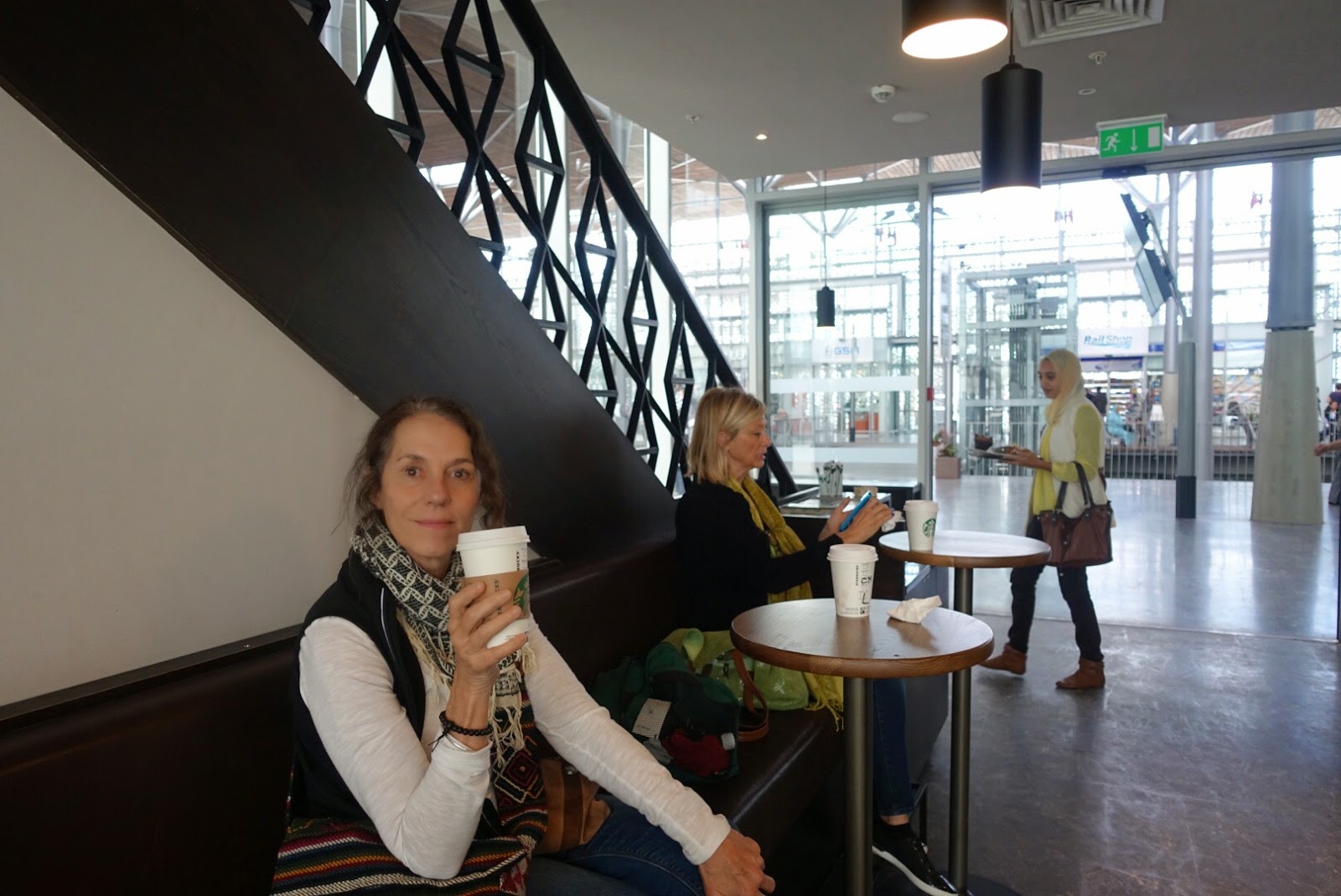
Much to our surprise and delight, we were greeted with a two-story Starbucks as we made our way up from the platform… a very welcome sight!  A  couple of sips into my coffee made me realize how bad the coffee at the house is.  It’s instant coffee that’s been boiled and is served with hot milk.  Tea doesn’t seem to be available unless it’s the traditional Moroccan mint tea, which is only served at lunch, and with far more sugar than I’m generally used to.  I don’t usually visit American sites when traveling outside the country, but I was thrilled to enjoy a Starbucks this morning.

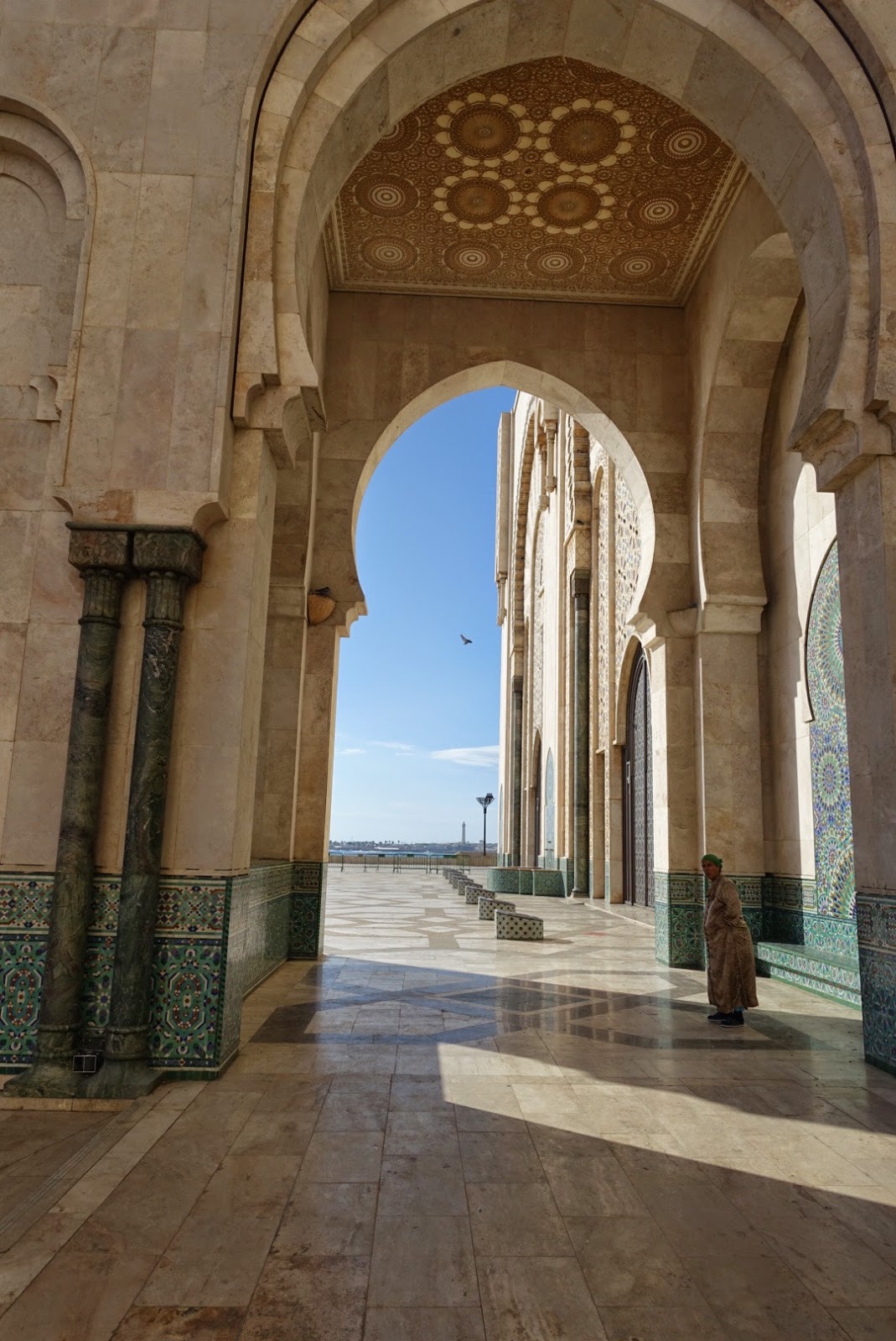
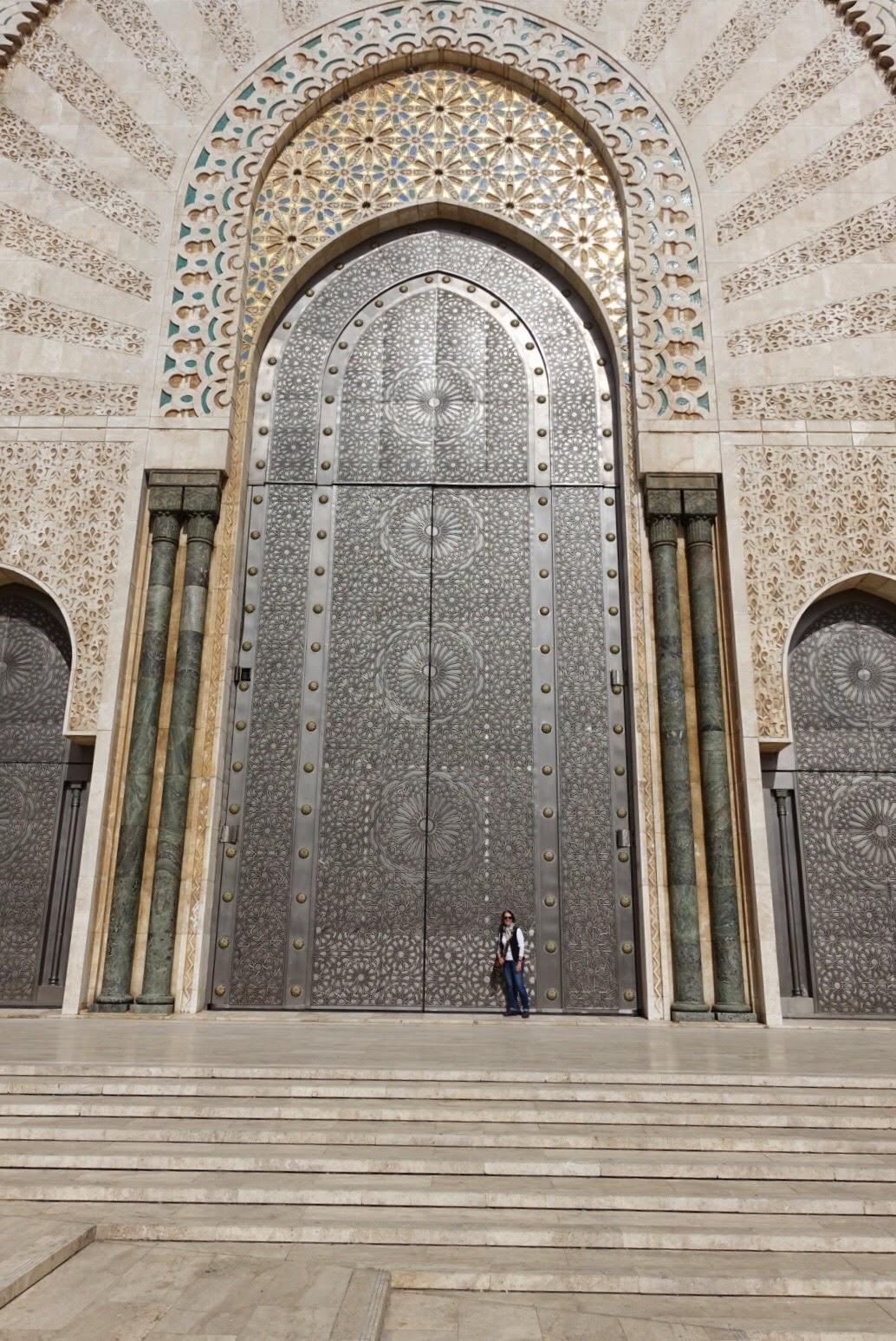
The main attraction in Casablanca is the Hassan II Mosque, the 2nd largest religious building in the world after the mosque in Mecca.  It was completed in 1993 after six years of construction.  The project involved 35,000 craftsmen and had a price tag of over $500 million.  The price tag fell upon the people of Morocco, with even the children offering up their pennies to help pay for it.  We arrived twenty minutes too late for the tour, and we really didn’t want to wait two hours for the next one, so we asked one of the guides if it would be okay for us to go in a bit late.  No.  There were no exceptions.  Dee Dee added that we were staying in Rabat and were volunteering in the orphanage (where her placement is).  It was like Dorothy explaining to the wizard that we had come all that way…

”Well, in THAT case….

I don’t think any of us like playing the “volunteer” card, but it is nice to gain the respect from the
locals when they find out why you are here.  Well played, Dee Dee. Having a private tour was nice.  I must say, as elaborate, exquisite, grand, enormous, and incredible as it was, I found myself somewhat offended by the huge gesture of grandeur that this King built in his honor.  The people built it, but it clearly is not for the people.  First of all, it cost nearly $10 to enter, a price that made it clear it was for tourists, not Moroccans.

Although the call to prayer went off while we were there, no one was coming in to pray.  It felt overly large and far too empty.  Many of the rooms were for “show” only (our guide shared that with us as I asked), such as the rooms for ablutions (where the body is cleansed before prayer).  In a city with so much poverty, walking into a large, intricately tiled room used only as a display for tourists seemed like the wrong way to spend so much money.  From what I’ve read, many of the locals feel the same way.  I am glad we went through, and was happy to be able to step inside, especially given that it is the only mosque in Morocco that a non-Muslim can enter.

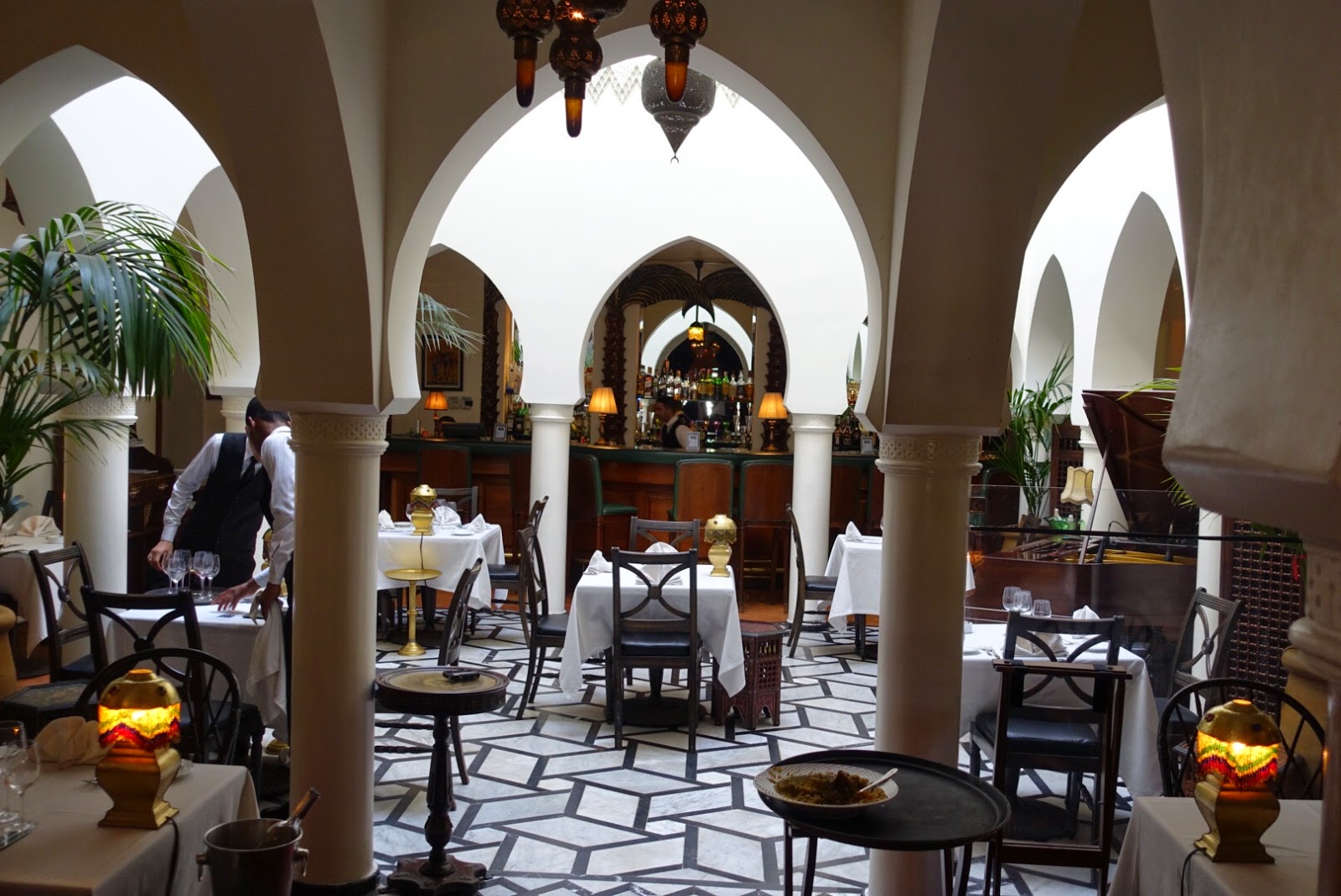
The other highlight was a delightful lunch at “Rick’s Cafe” (from the movie, Casablanca).  Although the food at the house has been outstanding, it was nice to have a leisurely lunch in a restaurant.  OK, maybe it was the glass of wine that added so much to the enjoyment.  There was a note on the bottom of the menu, by the way, to any Muslims that may be dining there, that some of the dishes may have alcohol in them, so one should check before ordering.  As Mohamed has said, alcohol is against the law here, but is available for tourists… and tourists only….(I think there is a lot of turning a blind eye that goes on around here…)

One last observation… I noticed small rooms at the train station, one for men and one for women, where shoes are removed at the doorway and people can slip in to pray during the calls to prayer.  I saw several men going in, but no women.  I asked some of my students about this the other day, and one of the gentlemen told me that it’s more important for the men to go pray than for the women.  I’m not sure how accurate that is, but from what I observed today, it seemed like the women were too busy tending to the children to slip into the rooms for prayer.  I suppose what has struck me the most about the call to prayer is that the women and the men pray separately.

We made it back to the house just in time for dinner, but I’m still pretty full from lunch.  Tomorrow, the language school is closed, so I will be spending time at the orphanage.

A welcome site…
Hassan II Mosque
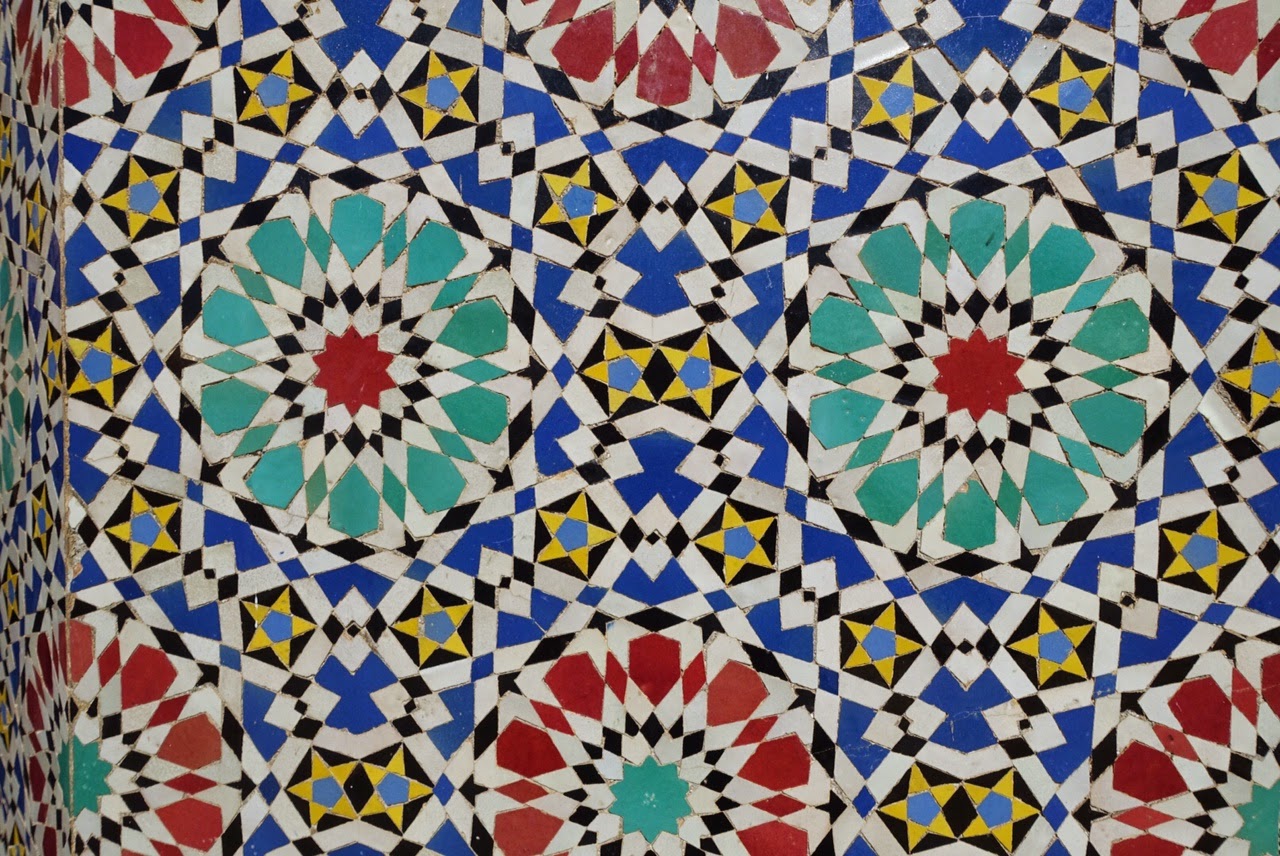
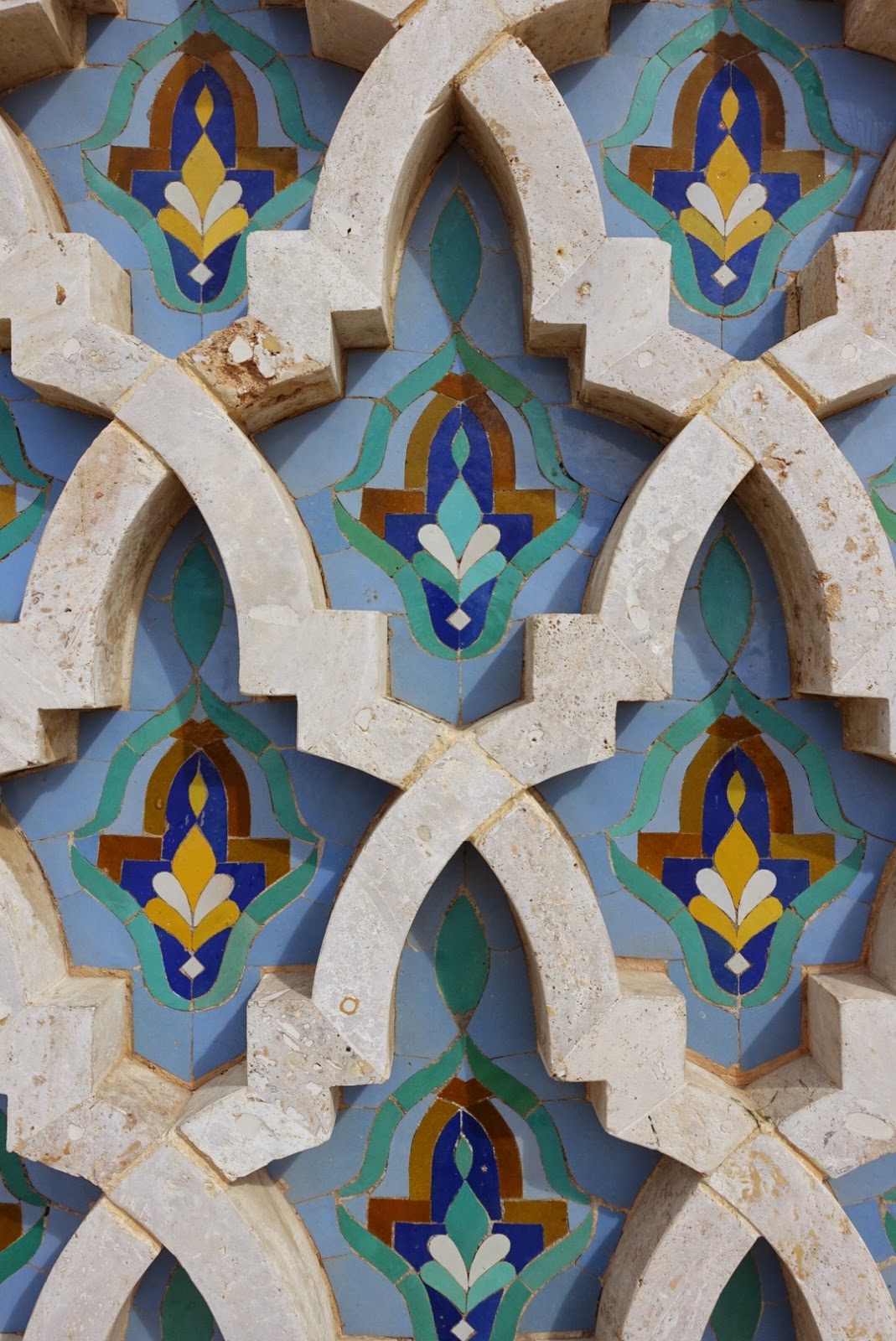
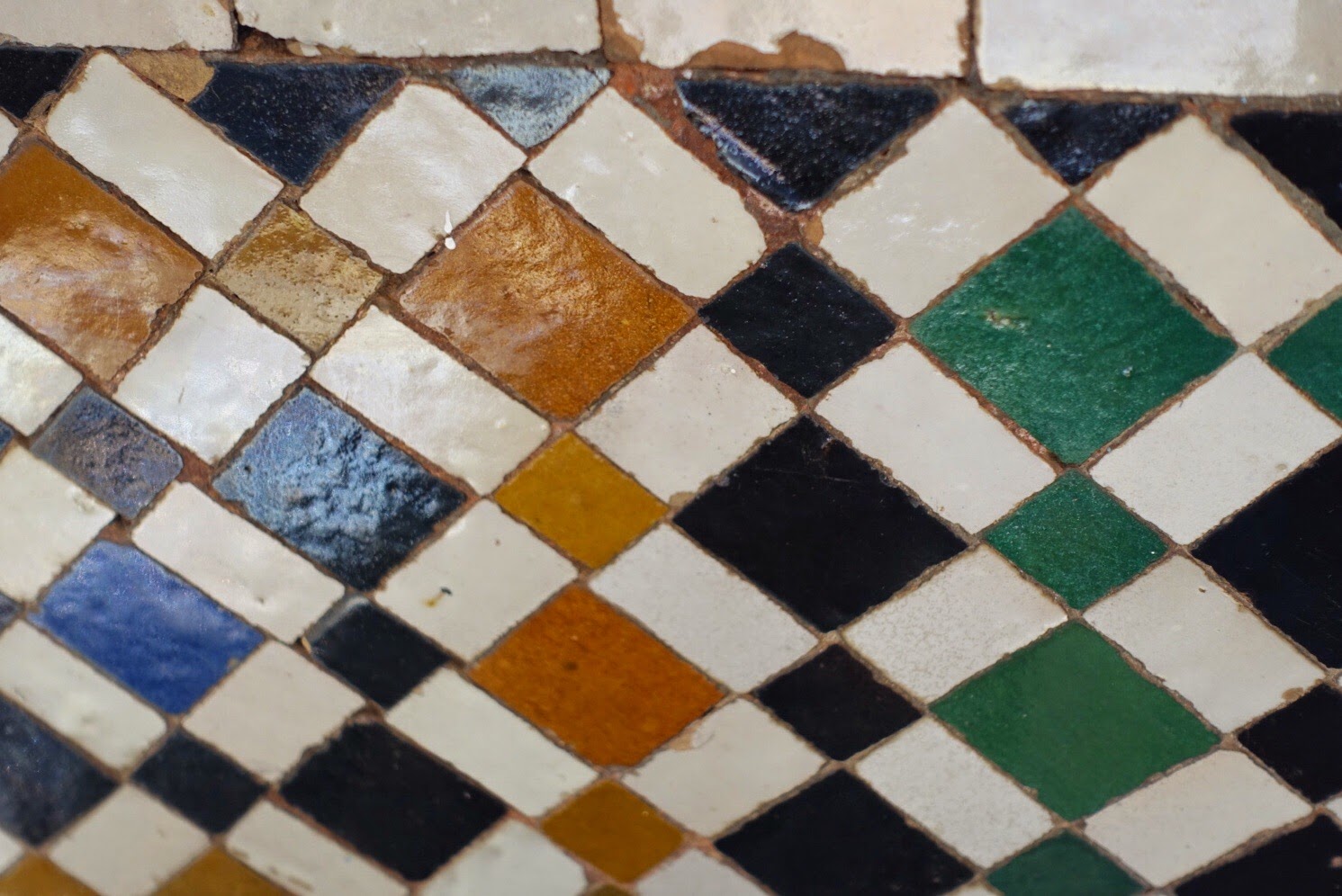
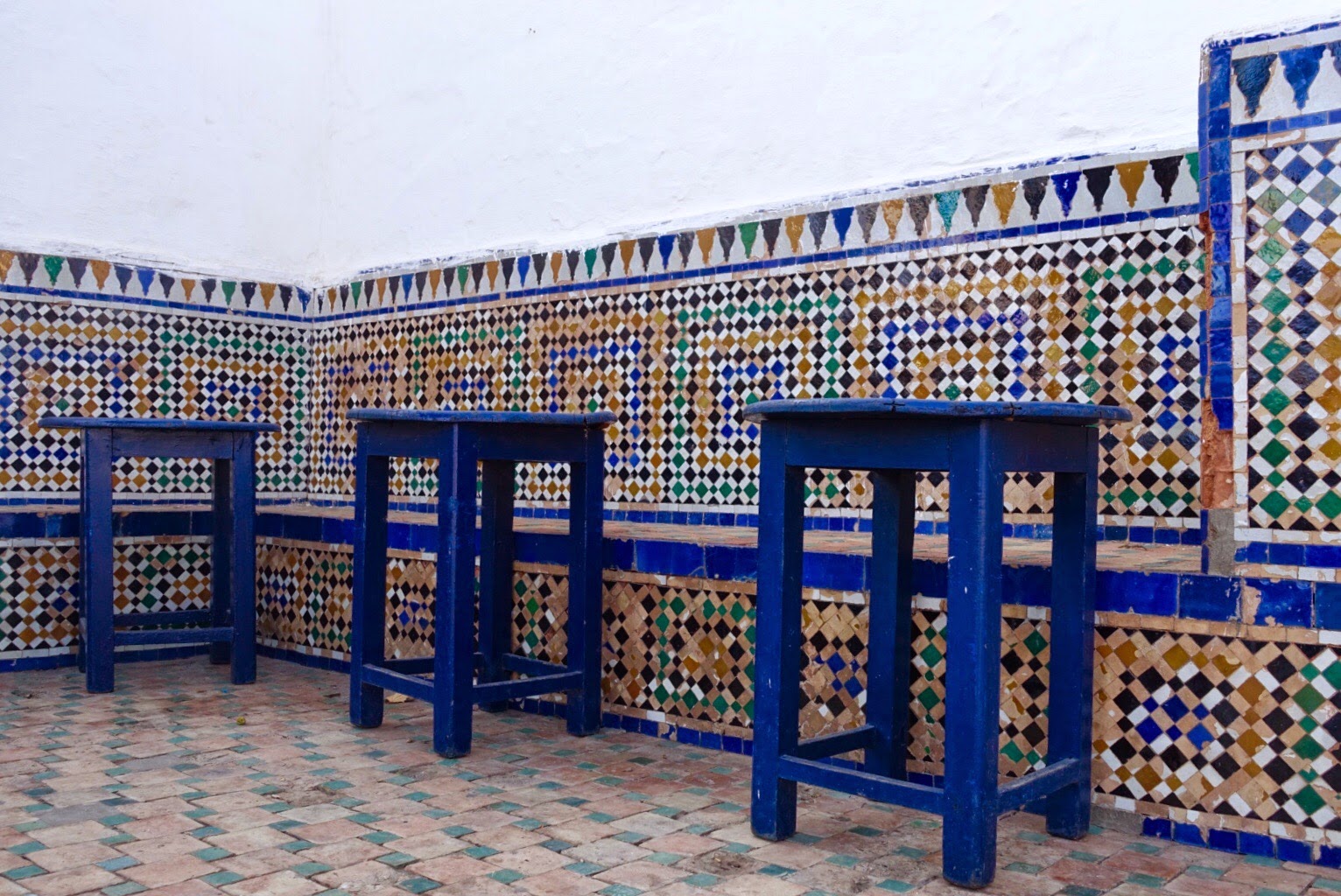
Intricate tile… everywhere!
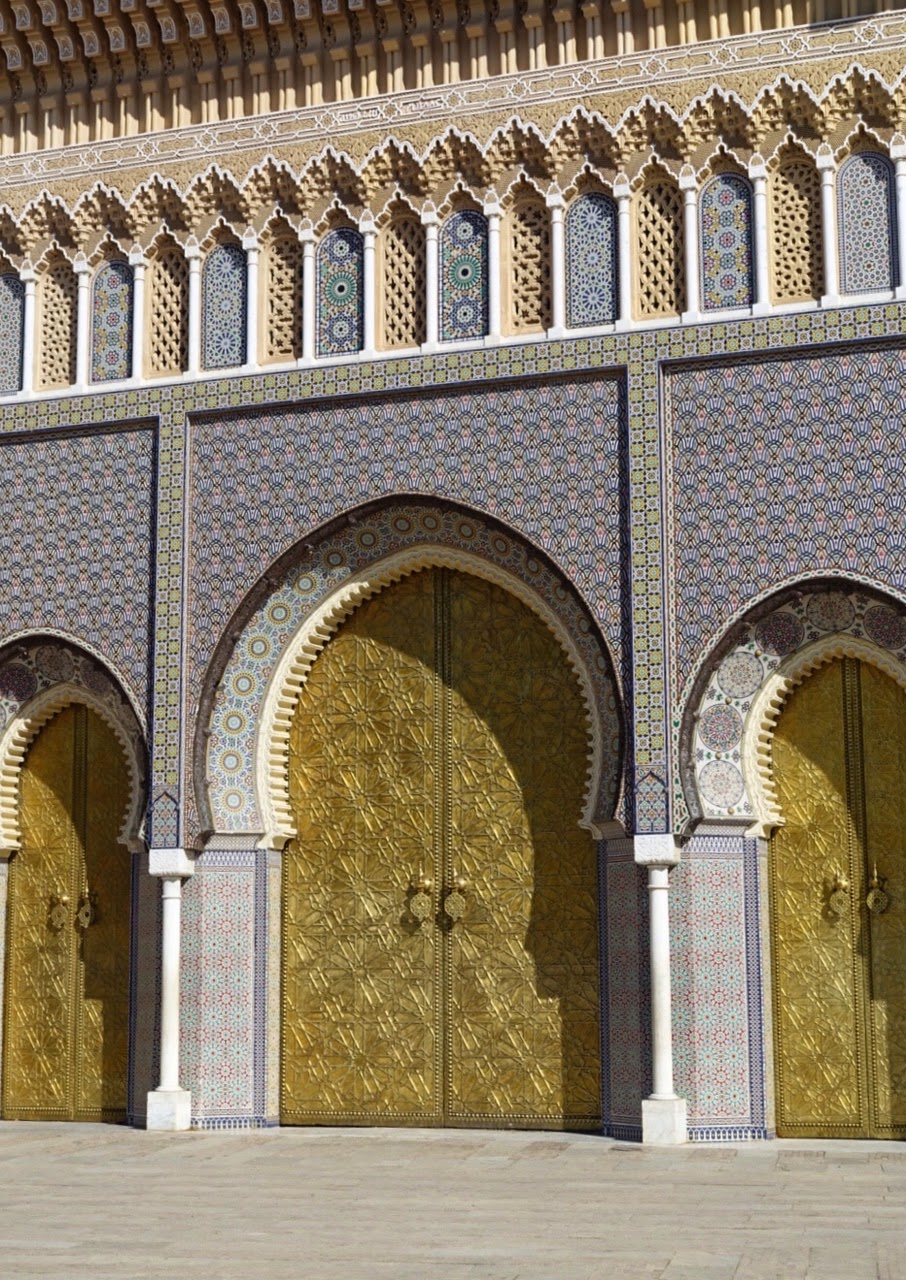
BIG door!!!
Rick’s Cafe

The young man knows his adjectives and the teacher has success…

Give it time and have patience…

Today, during an impromptu study of adjectives, I had each of the six students come up with three positive adjectives describing someone they knew, without repeating any.  The next-to-last student at the table described her best friend with these three adjectives:

1.  She’s beautiful

2.  She’s stylish

3.  She’s slender

The last student, a 20-something young man with a continual smile on his face and twinkle in his eye, had only one response when I asked him for his three adjectives, and it was:

“I want that girl’s phone number.”

And we’ve connected… the teacher and the students.
This is real learning.  We’re getting to know each other well enough that humor is beginning to filter into the lessons….
Today was a much better day.

English lessons for them, Arabic lessons for me.

I have no idea what impact I had this morning during my first day teaching English, but I was given an exquisitely drawn rendering of my name in Arabic by the one student who told me without words that she was not going to talk.  Instead, she carefully drew a very stylized version of my name in Arabic.  Every once in a while, I’d notice her looking up from her drawing, with a
grin or a chuckle at something I had said, so responding or not, I think she understood more than she wanted to admit, and was simply shy about speaking.

There were 20 students at the school, mainly female (three male students trickled in during the course of the class, which surprised me, but I was told that men were allowed to attend the English lessons).  Although they all had different skill levels, the one thing they had in common was their desire to learn.  I was with another volunteer from the house, Kelsey, who made it a bit easier, even if that was simply to have someone to share glances of “what do we do now?”  We decided to break into two groups of ten, which made conversing a bit easier.  Because we didn’t know what their English abilities would be, we didn’t bring any materials with us, so we were winging it all the way.  I did, however, bring some photos I had of my family and life, as I thought they would make for a good conversation starter. They all seemed to be able to understand most of what I said and could string together simple sentences.

Shortly after passing the photos around, I noticed that the woman seated next to me had lowered her head onto the table.  I thought that perhaps she wasn’t feeling well, but then I realized that she was crying.  She explained to me that her son lived in California and she missed him terribly. Seeing the photos of me with my children made her sad.  Of course, I felt terrible, and any momentum I had made with my now smaller group of students was quickly lost.

One of the other women glanced at me and, without saying a word, giving me permission to go on, as she knew her friend would be fine. No one else in the group reacted to the crying. Maybe this happens a lot?  I couldn’t help but remember something Mohamed had told us the previous day: never take the value of our passports for granted.  In Morocco, you must obtain a visa to leave the country, which requires an application several months in advance, along with a $160 fee.  He said that you may or may not get the visa, and you don’t know until you are notified by mail.  Of course, the $160 is lost either way (minimum wage is $250 a month, so a $160 fee is considered a lot of money).  This poor woman, working so hard on her English so she will be able to speak English for “when I’m in America,” may not even be able to get a visa, regardless of her language abilities.

I had just gotten started again with my impromptu teaching when the same woman who indicated to me that it was Ok to continue, grabbed my arm and pulled me closer to her, and told me she had recently had an operation.  It took a few tries of her telling me, but I was finally able to put it together that she had breast cancer, had recently had a mastectomy, and had just finished radiation.  She may have found a friend, but I’m not sure sitting next to me is such a good idea, as I think she was trying to turn a classroom situation into “private lessons.”

I pulled out just about everything I had, as my group patiently waited to see what I had for them next.  No one, except for my new best friend, wanted to take any initiative in the talking, short of the guy in my class who was very interested in learning more about Las Vegas.  I’ve only been there once, but I did my best to stretch out what little I had.  Oh,  and he wondered…”Did I eat at McDonald’s a lot?  I think he was disappointed when I told him no, I didn’t eat at McDonald’s.

This was not easy today, and if I didn’t have something to tell them, they would quickly fall into spirited conversations among themselves… of course, all in Arabic.  I experienced several of those awkward moments of watching myself as I tried to work my way back into the attention of everyone who was surrounding me at the table.  Slowly, work myself back into visibility with anything I could pull up… “What did you do yesterday?  Wasn’t it hot?”   Sorry, folks, but short of asking you your favorite color, that’s all I’ve got.  I know it will get better.

Kelsey had a similar experience with her group, so once back at the house, we started poring through the stacks of materials we found in a supply closet and were relieved to at least have something to work with tomorrow.  This is a free language school for students and is staffed solely by volunteers.  I always wonder how much impact I’m really making during volunteer situations like this, but when Mohammad told us that if we weren’t there, they wouldn’t have had class, it made me realize that we absolutely were making a difference, regardless of how inept I felt today.

Teachers: I’ve always had the utmost respect for what you do, but that respect doubled today.
The rest of the group volunteered at the children’s orphanage or the children’s hospital.   After hearing their stories, I am confident that I made the right choice in my job placement.  Most of the children at the orphanage were “thrown away” after birth by single mothers to avoid jail time, as giving birth out of wedlock is punishable by law.  One of the other volunteers told me that most of them were severely deformed and needed complete care.  She also told me that the place was immaculate and that the children were very well cared for.

I remember the long, quiet rides back to the house after volunteering at my placement in Perú, and today was no different.  No doubt, first and foremost on all of our minds was how fortunate we were that we were born in the United States.  It’s easy to forget that.

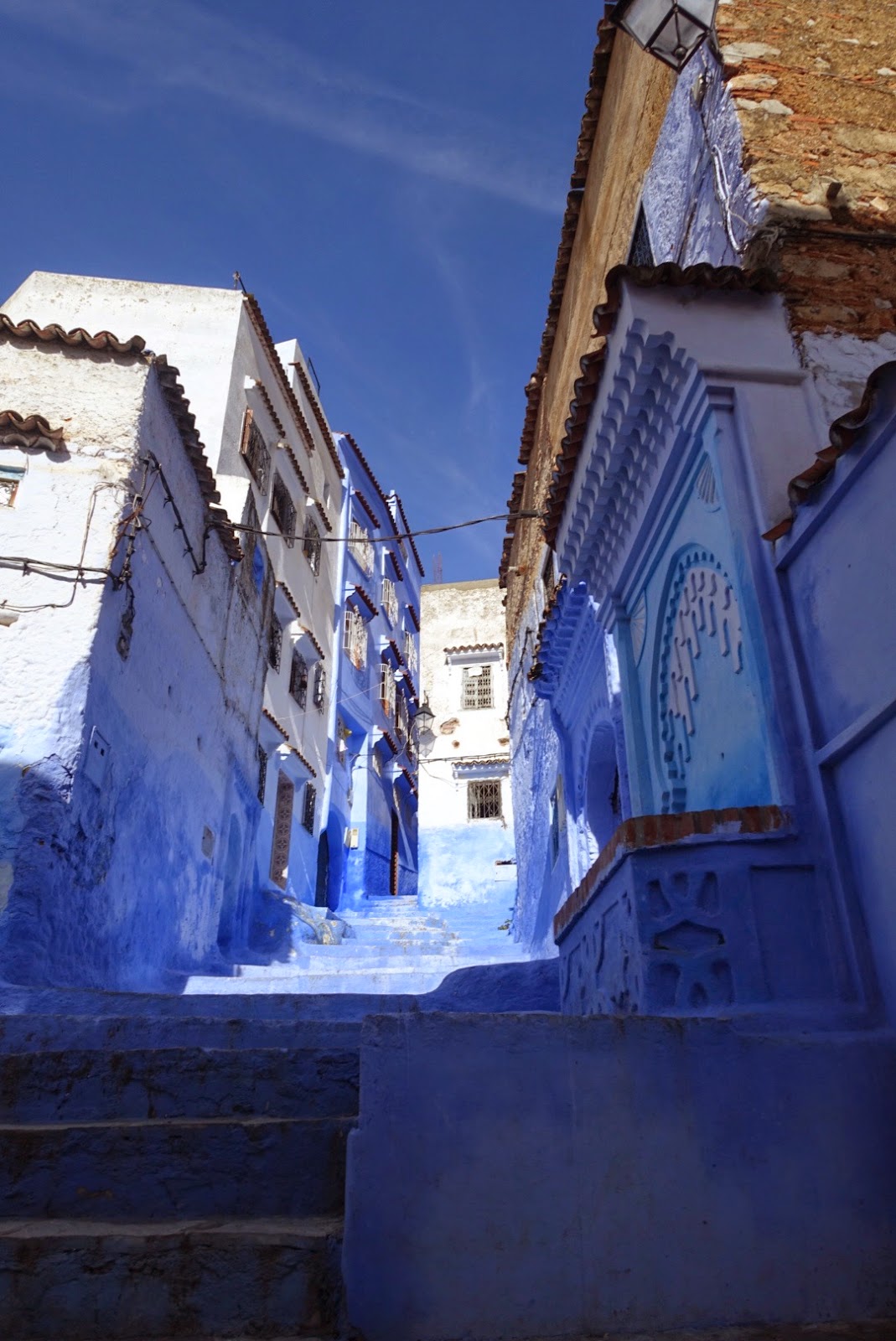
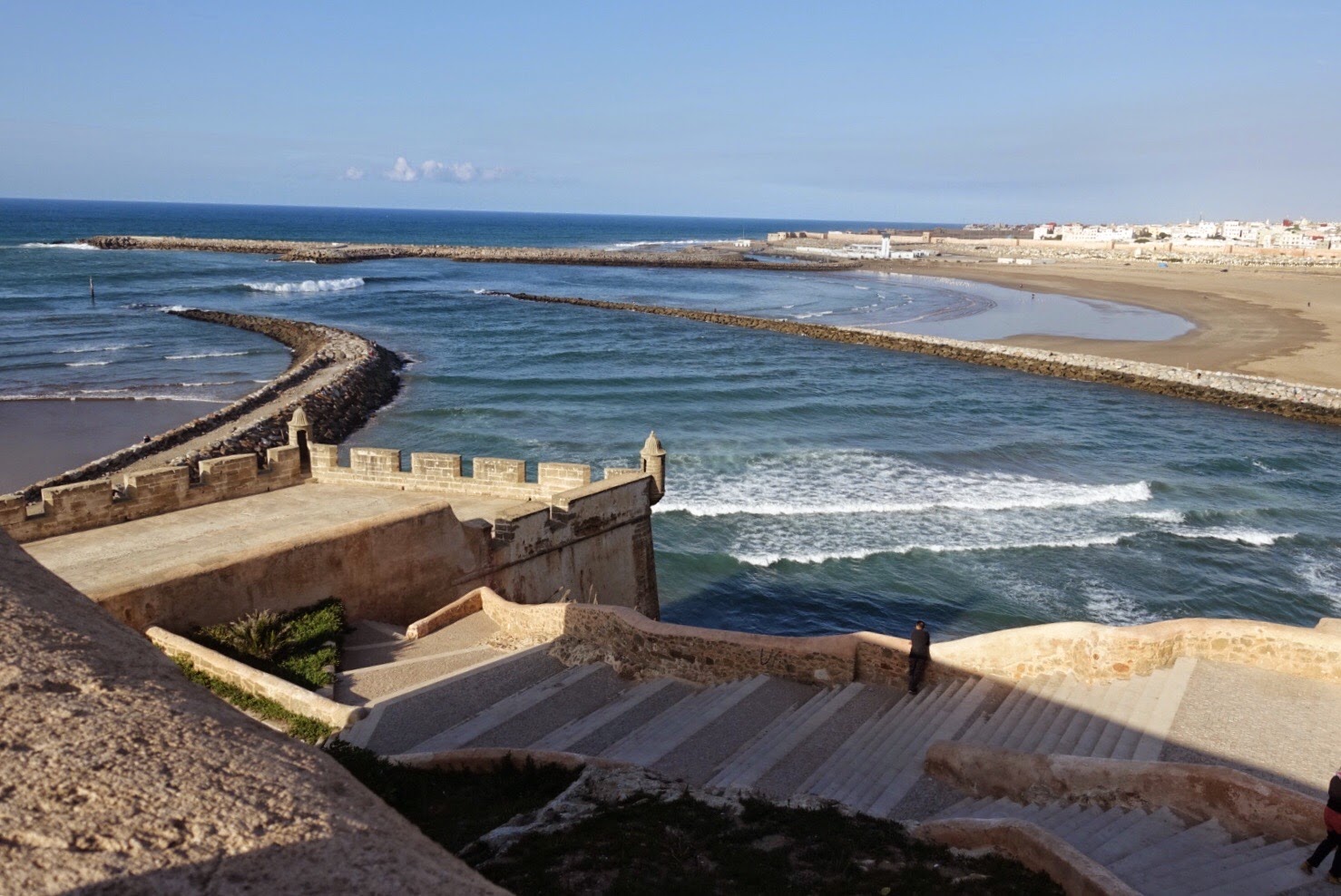
We had an afternoon of sightseeing, with time inside the Medina (the old walled town), an ancient fort, and our first glimpse of the ocean.  The colors were amazing.

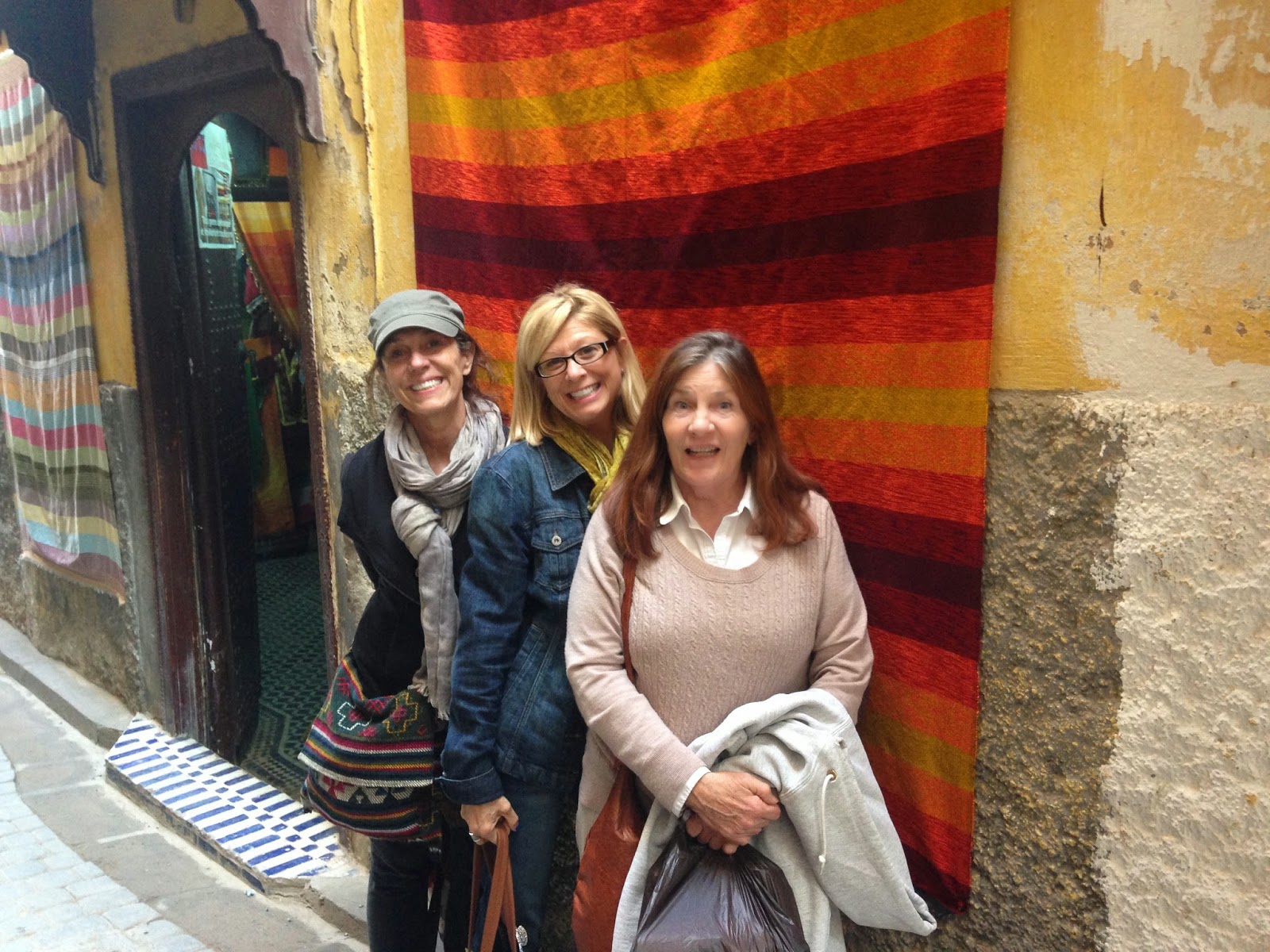
My name is in there somewhere…

One last thing… in the short amount of time I’ve been here, I’ve already become accustomed to the bells, that sound more like fog horns, that signal prayer time…  four times a day..

Arabic is hard…

This is what I learned today… (Or at least what stood out).  Arabic is a challenging language, but I had kind of figured that out before I came, so I’m not going to count that as one.

1. TRUE Argon oil (very popular here) comes from the Argon tree, which is only grown in one city in the world… Agadir, Morocco, which also happens to be the hometown of our house manager.  Goats climb the argon trees and eat the hard shell off of the nut, which then falls to the ground and is harvested.  I’m hopeful to be able to witness this… trees filled with goats.  Mohammad said it looks a lot like a tree full of birds, only of course they are goats, not birds.  Seems like something worthwhile to seek out.

2.  Bread is considered sacred (it is a very bread-centered diet here… again, died and gone to heaven on the food here…) so all bread scraps must be put in a separate container when we clean up our plates after mealtime.  The leftover bread is then fed to animals.  All other trash is thrown out.  No recycling (or at least not here…)

3.  If you are Moroccan and want to get a hotel room with someone of the opposite sex, you must show proof of marriage.  It is illegal for Moroccans to share a hotel room unless married.  This does not apply to other nationalities.

This is a fascinating country, and our in-country manager, Mohamed, is extremely personable and very knowledgeable.  He served in the Peace Corps, has a law degree, is fluent in several languages, and has an incredible sense of humor.

She’s not in Kansas anymore…

You know you are far from home when you have to go through two other translations before you finally hear English. Still, you’re discouraged that you can’t understand a word of your native tongue, which is hidden behind a very thick Arabic accent with a significant French influence.  And then there’s the signage, as beautiful as it is curious.

The journey to Rabat was long… not because it was all that far (a “short” two hour flight from
Paris), but because the most significant part of the flight, Boston to Paris, felt more like a Kansas City to Albany run given the size of the plane…knee to knee, elbow to elbow, bad food and generous pours on cheap wine, all adding up to a not so great experience, short of a lovely French woman sitting next to me (seriously, are we ever so intimate with strangers but on a plane?) who was interested in what I was knitting and pulled out her phone to share photos of her recent knitting projects.  Sometimes words aren’t necessary.  I love that.

The house where I’m staying is small but very charming and efficient.  It’s also immaculate, and I would feel totally comfortable eating off any part of the floor, where, by the way, shoes are not allowed.  Barefoot all the way.  I will be sharing my small room with two bunk beds with another girl, whom I haven’t yet met, as she is away this weekend.  I’ve taken cues from her neatly stacked belongings and have tried to organize my things with that in mind. I’ve copied her and am using the top bunk to lay out my clothes, as there isn’t another spot to put them. I couldn’t help but think back to my college dorm days, waiting to meet my roommate, whom I didn’t know and whose bed was mere feet away from mine.

Tomorrow, the four volunteers who arrived today and I will have our orientation, when I will learn more about what I will be doing during my time here. Mohamed, our house manager, said I may be the only one from the house placed at the women’s center, as it sounds like everyone else will be working at the orphanage.  The unknowing, going to bed with new sounds, new smells, and new sensations, reminds me of why I love this so much, which surprises my orderly, Virgo side.  It takes me back to so many first nights in new countries when I teetered between waking up in the middle of the night with feelings of what the hell am I doing?, to not being able to fall asleep because I was so anxious for it to be morning when I’d be able to get a closer look at my new temporary home and learn more about where I’d be volunteering.

There were only four of us in the house tonight as the rest of the group was traveling for the weekend. We had a lovely light supper of lamb, rice, fruit salad, roasted fennel, Moroccan soup, homemade bread, dates, pomegranates, and a combination of sautéed vegetables.  Not only was it a beautiful spread, but it was also delicious.
For now, I’m tucked in my lower bunk, ready to sleep off some of this jet lag.  I’m soaking in the smells and sounds of this new city, new country, new continent, and it’s feeling pretty fantastic.  I can smell a hint of jasmine that is coming through the billowing curtains of my open deck door. Perfection.

I need to add a disclaimer regarding editing. I’m not used to my new iPad combined with my blog site that’s totally gone French on me ( I definitely need to learn how to say “delete” in French and quit pushing that button.) This was quite a challenge for me to complete this tiny task of typing tonight. I’m hoping I can blame most of it on jet lag, but that may be overly hopeful. So ignore the obvious, including the creative indents that insist on being present regardless of what I do.

Salaam from Rabat!

Laurie Sunderland, reading from right
to left.

Going to the “BEYOND” part…

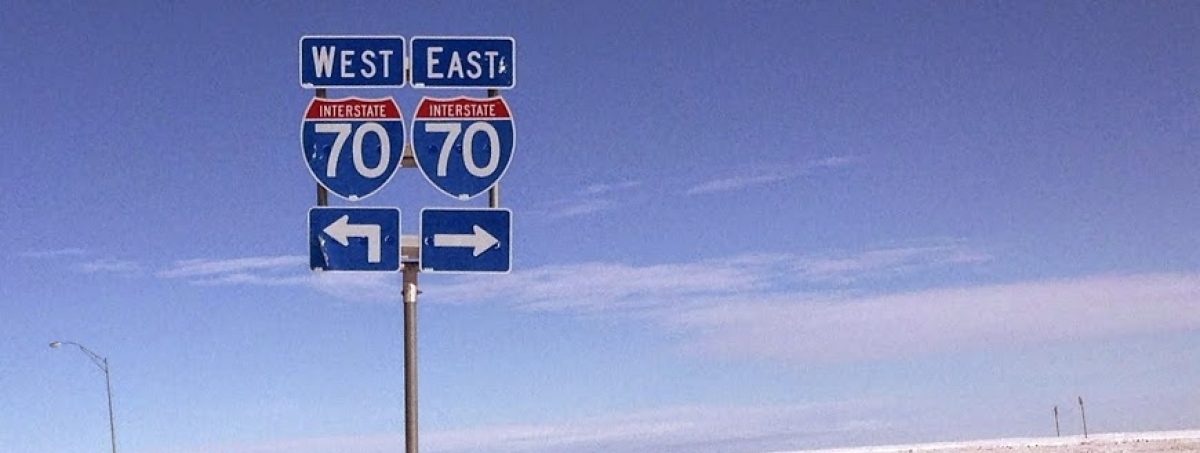
In a few days, I’ll be leaving the many comforts of home and stretching my travels a bit farther than my usual 677 miles east or west down I-70.  I’ll be headed to Morocco, where I’ll be living in Rabat for three weeks.  I’ll be spending my time volunteering at the Feminin Pluriel, a women’s center that utilizes social, cultural, and educational activities to empower women.  That being said, I really have no idea what I will be doing.  The language barrier is a bit daunting to me right now, given that I don’t speak Arabic, and I’m going to assume they don’t speak English, but I may be wrong.

Several months ago, I went through the motions of thinking I’d learn some basic phrases in Arabic. I bought the book, turned a few pages, and got discouraged.  Then there’s the whole Arabic characters situation, which, although quite lovely on the page,  is all very unfamiliar and overwhelming.   I will never complain about the subjunctive tense in Spanish again.  The book tells me that with a vocabulary of only a few hundred words, I will be able to “survive in an Arabic-speaking country and even communicate some thoughts.”  I’m still working on “good morning” (sabaahal kyayr), but am not sure how far the one phrase will get me especially once the sun goes down.  I think I’ll bring my knitting.  That’s one thing I can teach without words.  And photos.  Pictures tell stories without words.

This will be my second volunteer trip with the Cross Cultural Solutions organization (my first being to Peru) and my first time in Africa, which feels very far away to me right now… 4,681 miles to be exact.  While preparing for this (ie, packing, unpacking, rethinking, then repacking, etc.) I find myself teetering between feelings of excitement and anticipation, laced with a bit of what the hell am I doing?  I’ve been down this emotional path before while anticipating the pathways to new adventures. Whether it’s on a mountain trail by myself, or getting ready to travel to a foreign country for three weeks by myself,  where I don’t speak the language and know little about the culture,  I think a bit of fear and trepidation is good.  I believe it helps keep me safe.

I’m guessing people will ask me when I return home, What did I do? Did I help build houses, schools, or develop programs that will live on long after my stay?  And I’ll answer just as I did when I returned from Perú—none of those things.  But what I did do was, I listened.  I held hands.  I accepted gracious invitations into homes with dirt floors and was invited to sit on couches that scared me because of the rodents that I’m sure were sharing the cushions. I danced to Peruvian music that I never could find the beat to, and painted the thick, dirty nails of grateful abuelas with old, sticky nail polish while I held their hands in mine and recognized the thread of vanity that connected us both.  I listened to countless stories of abuse, fear, and pain told to me by some of the strongest women I’ve ever met.  I laughed with them.  I cried with them.  I held their hand and accepted their affection.  I immersed myself in a culture that I thought I knew about before going, but really had no idea.

But what did you DO???

What I did was learn that the world is far bigger than the country where I comfortably reside, and that there is so much to be learned from the handful of third-world countries I’ve spent time in.
I learned how much I take for granted—clean water for starters.  I saw a lot of sickness that resulted from drinking the local water without adding bleach to it first.  Seriously.  Bleach.  While we run our water through filters that are supposed to remove impurities, these people were adding drops of the same substance that has warnings on its label not to ingest. Fortunately, I had the luxury of bottled water at my disposal while in Peru, unlike so many in the community where I stayed.  One of the first things my daughter, Emery, said to me during our initial stay in Perú was how little the people we were volunteering with had, yet how happy they were, and maybe, just maybe, they had a much better understanding of what makes a person happy than we did.  What a beautiful realization for an 18-year-old to recognize about life.  To see such joy on the faces of people who live their lives in a constant struggle to survive was a lesson to us both on the importance of living in the moment and finding gratitude in the simplest of things.

I have no idea what to expect during my stay in Rabat, but am guessing many of the experiences will mirror those from Perú, which is what has attracted me to volunteer again with this organization.

Years ago, during my second attempt at college, I decided to major in anthropology after sitting through the first lecture of a cultural anthropology class.  Before signing up for the class, I wasn’t sure what the study of anthropology was.   After making a definitive declaration that my major was going to be cultural anthropology with a minor in Spanish, I was asked countless times what I planned to do with my Anthropology degree and Spanish studies. Teach Spanish,  perhaps?  I really had no idea.  Almost 30 years later,  it’s all starting to make sense.
Although I’m feeling nervous and have no idea what is ahead for me in the African country of Morocco, or “al-Mamlakah al Maghribiyyah” (المملكة المغربية), which translates to the Kingdom of the West, this feels exactly like what I’m supposed to be doing right now.

I look forward to writing my blog posts from Rabat, as much as time and the internet connection allow.  So, for now…. as-salaamu alaykum – the most common Arabic greeting and one that thankfully gets shortened to “salaam”, which means peace be upon you.

I’m going to call that “how to communicate without fuss or fear… instantly!” false advertising…

Apostrophes, ships and the 3rd grader who ended up writing stories about it…

Shortly after I shared my last blog entry about revisiting my first home with my parents as guides, my Mom emailed me with this:

“All that beautiful prose from the 3rd grader who didn’t understand apostrophes.”

My first reaction was feeling very honored by her words given that I was retelling her story about my beginnings in Colorado, as I was too young to have my own story.  Secondly, I was touched that she remembered the story about the difficulties I had with grammar in the 3rd grade, specifically with the placement of apostrophies.

I have more memories from 3rd grade than any other in elementary school.  I loved my teacher.  I loved her shoes. I watched those red fringe-toed shoes walk up and down the narrow aisle of the temporary mobile unit classroom, demonstrating to a captivated audience how Indians would walk without making a sound… toe heel, toe heel, toe heel.  It was crowded in our small trailer classroom and maybe because the situations weren’t ideal, she was just a little more patient with us than a teacher in a normal-sized classroom would be.  We were the class who had to spend the year in the mobile unit because of remodeling, and initially, I think most of us would have opted for the normal classroom we were used to as the mobile unit was half the size, leaving us with very little personal space.

One of my favorite memories was when the Sacajawea book would be pulled out every afternoon after recess and Mrs. Faires would read to us. I was mesmerized. I held onto every word and for the first time, the notion that school could be fun and interesting took hold.  She made that year of being crowded into the tiny temporary classroom one of my favorites, and even though elbows were bumped as we did out lessons in our pushed together desks, I would not have traded those squeezed together conditions for a normal classroom.  It felt special, like we were special.  All that love went out the small louvered trailer window when the lesson on apostrophes and ownership began.

It’s not that I didn’t understand the the concept of ownership and placement of the apostrophe, it’s that I did not understand my Alabama bred teacher’s accent.  When she gave the explanation of “ownership,” what I heard was “on a ship,” which made little sense to me, especially given that I lived in Kansas and could count on one hand how many times I had actually seen a ship. Were ships really that important that they got their own apostrophe when used in a sentence?

After hearing Mrs. Faires’ explanation on apostrophes and possession, my conclusions were to use an apostrophe when whomever or whatever were “on a ship,” or “showed on a ship” as my teacher explained it.  I wasn’t sure what “showed on a ship” was, short of the visual of people on a ship, which was simple enough… or was it?  This all makes a whole lot more sense when I’m able to voice the words out loud and show that “ownership” sounds like “on a ship” when spoken with a heavy southern drawl.  I usually did well with understanding new assignments in school, especially when they weren’t of the math variety, but my 8 year-old, wanting to please self, was getting discouraged when worksheet after worksheet were handed back to me with an embarrassing amount of red ink on them.  Even the boy next to me, whose papers were always marked in red when he got them back, was getting good marks and happy faces on his returned papers.  And then there was the amount of time it took me to complete the worksheets.  While the other kids seemed to breeze right through the sentences, without having to look up in thought or confusion, I would read each sentence over and over again while trying desperately to find the ship, the boat or out of desperation, simply the water in the sentence so that I’d have clearance to add my apostrophe.  It seemed to me to be a futile exercise as few, if any sentences, made reference to a ship or for that matter, any maritime reference at all, but none of the other students were questioning the absurdity, so in trying to fit in with my peers, I kept quiet and kept searching… for the ship in the sentence.

More than once Mrs. Faires brought me up to her desk and would explain the “on a ship” concept to which I would share my frustrations of not understanding what “on a ship” had to do with most of the sentences.  Of course in this now comedy of errors, she heard my words speak Southern to her and would explain, yet again,  that “on a ship” requires an apostrophe, hoping that eventually it would all make sense to me.  After failing exercise after exercise, some how, some way, someone who did not speak with a heavy southern drawl, put it together that what I was hearing was different than what my teacher was actually saying.

It was my Mom who eventually shared the story with my teacher, Mrs. Faires, after she had reached out to her over their monthly bridge game, with concerns that I wasn’t understanding apostrophe placement.   It was also my Mom who noted the way Mrs. Faires said “ownership.” After  a shared laugh, she insured Mom that when teaching the concept of “ownership” to a new group of 3rd graders, she would make a point of writing the word on the chalkboard.

The one in the middle sporting the Bob Dylan look and the attitude smirk,  wasn’t about to admit to anyone that she didn’t understand why ships garnered so much importance that they got their own apostrophe… especially in Kansas for Pete’s sake!

I’ve got to wonder how long this would have gone on had someone not stumbled onto the problem, given that I was too embarrassed and too insecure to admit that I didn’t have a clue as to what the teacher was trying to teach me.  This insecurity would resurface again with my 7th grade Algebra teacher, who was from Brazil,  and spoke with a heavy accent.  The difference this time though, was that the rest of the class was hearing Mr. La Torre the same way I did, so would throw their hands up in question before I had to.  I ended up struggling with Algebra through college and have to wonder if I had had a teacher who I could understand and felt comfortable simply asking for help, would seeing the x’s and y’s still throw me into panic mode today?  Or am I simply more of a words person than a numbers person?  I’m grateful that my stumble with the apostrophes in the 3rd grade didn’t ruin me for the act of writing, the way x’s and y’s did for me in math,  as it’s been something I’ve loved and enjoyed for as long as I can remember.

Thank you, Mrs. Faires, for giving me pause and a smile every time I place an apostrophe, whether there’s a ship in the sentence or not.  And thank you, Mom, for not forgetting the story and continually encouraging my putting pen to paper.

Returning to my roots with the keepers of the stories at my side…

A few weeks ago, my sister, Robin, and I were given the tremendous gift of getting to step back in time for a few days, and with our parents as our guides, revisited the place where we spent our earliest days – Evergreen, Colorado.

Although our time there was relatively short,  one would assume that we had lived there for decades, given the many stories Mom and Dad have shared with us throughout our lives.  Because of the many stories and the joy with which they have been shared,  I grew up knowing how significant this little mountain town was in my parents’ lives.

They were young, very young, 20 and 25, with a baby on the way (Robin), and were actually on their way to Oregon, simply on a “Why not?  It sounds like a nice place to live…” when they stopped in Denver to see my Mom’s parents.  While there, Dad found out that to teach high school music in Oregon, he needed a master’s degree (something that would come later and in Missouri), so they decided to stay in Denver.  Besides, with a baby on the way, it would be nice to have family nearby.  I love thinking about those carefree 20-somethings with a baby on the way, pointing their car and trailer’s belongings west, without really having much of a plan.  Somehow, it gives the many wing and a prayer plans I’ve had a bit more weight.

There were no teaching jobs in Denver, but while interviewing, a call came through from the principal in Evergreen with the news that the high school music teacher had not renewed his contract and through the perfect timing of a synchronistic moment, my Dad had a job and their plans to continue their journey west to Oregon were shortened to the short 30 minute drive west from Denver to the scenic mountain town of Evergreen.

Robin and I have both heard the stories, countless times, of our time in Evergreen, but to get to hear them again, with the soil underfoot, was truly a gift.  Hearing about Dad coasting down the mountain from Evergreen to St. Anthony’s hospital in Denver, my Mom in labor with me, made a lot more sense as we recently made our way down from Evergreen to Denver  – an easy coast of a drive that was a necessary choice on that day, almost 60 years go to the date, as the gas tank was near empty (he made it with fumes to spare, I’m told…).

Although Robin and I had tried to find the house we lived in when we were in Colorado last summer,  our interpretation of Mom and Dad’s directions had us on the wrong end of the town. Still, with their keen memories and navigational skills, we drove right to the house a few weeks ago.  Both of our initial reactions upon seeing the lovely home that sat off the road on five acres were… “wait… I thought we were poor.” ….  Yes, they reassured us… We were poor.  They said it looked like the house had been added on to and that while it looked nice on the outside, the inside had needed work… work that Dad chipped away at when he had the gift of both time and money.   The furnishings were sparse, and although Mom had a wringer washing machine, she didn’t have a dryer, so after washing the clothes, diapers in particular, with two under the age of two, she’d hang them out on the line, where they would freeze dry in the arid air.  She’d then bring them in and lay them throughout the house to thaw.  For some reason, I’ve always connected with pioneer women and have sworn that I must have lived during that period of time in a past life.  This explains it.  I did.

As we sat in the drive and looked directly at our past, hearing the stories from the ones that created them, that piece of my past, that I don’t remember, became real, and I understood where my love for mountains was born.  Dad told us that when Mom was pregnant with me, she told him that she was not going to come home from the hospital until we had a flushing toilet IN the house.  Yes, these adventure-seeking parents of mine were using an outhouse, not to mention transporting their water in  50-gallon drums.  Dad worked tirelessly at digging the leeching well near the house in preparation for my arrival, using a pickaxe, a shovel, and his favorite tool, dynamite.  And lo and behold, Mom had the flush toilet she had requested upon her arrival home from the hospital with me.  Simple times, but not all that simple a request.  Still, every mom just home from the hospital with a newborn and a one-year-old to greet her deserves the luxury of an indoor toilet —and one that flushes, no less.  It sure beat any “congratulations on your new baby” flower arrangement Dad could have gotten her.

Out of the many stories I’ve heard over the years, and my hands-down favorite, I heard for the first time last year.  Because evergreen trees surrounded us, Dad would go to the woods behind the house to select the Christmas tree, then drag it down to the house.  I believe it was my first Christmas (and if it wasn’t, I’m taking artistic license here) that Mom questioned the tree he brought home, wondering if he could have found a tree that was just a little bit prettier.  So, on his way home from work the following day, the perfect tree came into view with the lights of his car.  He cut it down, put it in the car, and as he was pulling away, his car lights gave him a better view of exactly where the tree he had just cut down had come from… the landscaping in the front yard of one of the summer vacation homes in the area.  When I asked him what he did after discovering what he had done, he told me that he couldn’t exactly put it back, so he covered the stump with snow and drove home.  Given that it was a summer vacation home,  he had several months before the missing tree would be noticed.  No doubt some of that guilt waned with Mom’s overwhelmingly positive reaction to the beautiful specimen of a tree that would grace our small living room that Christmas.

“Now THAT’s what I had in mind!  It’s the PERFECT tree!”

Dad had set the Christmas decor bar high on this one…
I don’t know how long it was before he came clean on exactly where the tree had come from, and I am betting that the following Christmas, it was back to the scrappy juniper Christmas trees.  All of our Christmas trees in those early Colorado days were decorated with pine cones that Mom had spray-painted gold.  It was only in later years that I understood the significance of Mom insisting on adding what we thought at the time were “the tacky gold spray-painted pine cones” to our then more lavishly decorated trees.  It was a nudge to the memory of where they began as a family, and although times were very tough, they were also very good.

I love hearing their humble roots stories—two kids with two babies eking out a living in the mountains of Evergreen, Colorado.  Funds were so tight that when a job offer in northern Missouri came in for far more money and an unlimited high school band budget, Dad had to say yes.  He has told me several times that when they drove out of town for the last time on their way to Missouri, he had hoped for a rainy, cloudy day or at least weather that was overcast enough so that he wouldn’t have to see the mountains in his rearview mirror.  It was sunny that day.   To this day, I think both Mom and Dad would agree that it felt like the mountains were waving goodbye to them as they left them in the rear view mirror.

What a gift it was to return to those Evergreen mountains just as they had left them so many years ago, and better yet, to get to return with the keepers of the stories.  Although I was always a part of the stories,  I feel a real sense of their connection to me now.

My Evergreen, Colorado roots
Mom and Dad… who still have a bit of that Colorado spirit in them….