
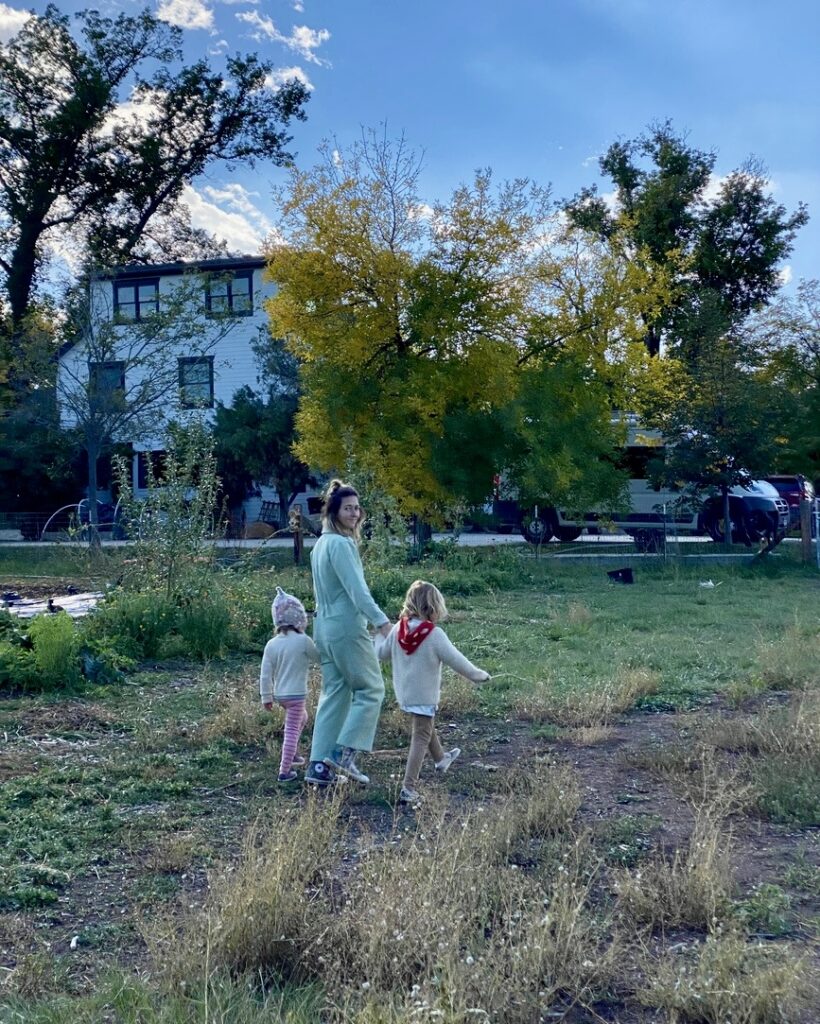
Pieces of Emery.

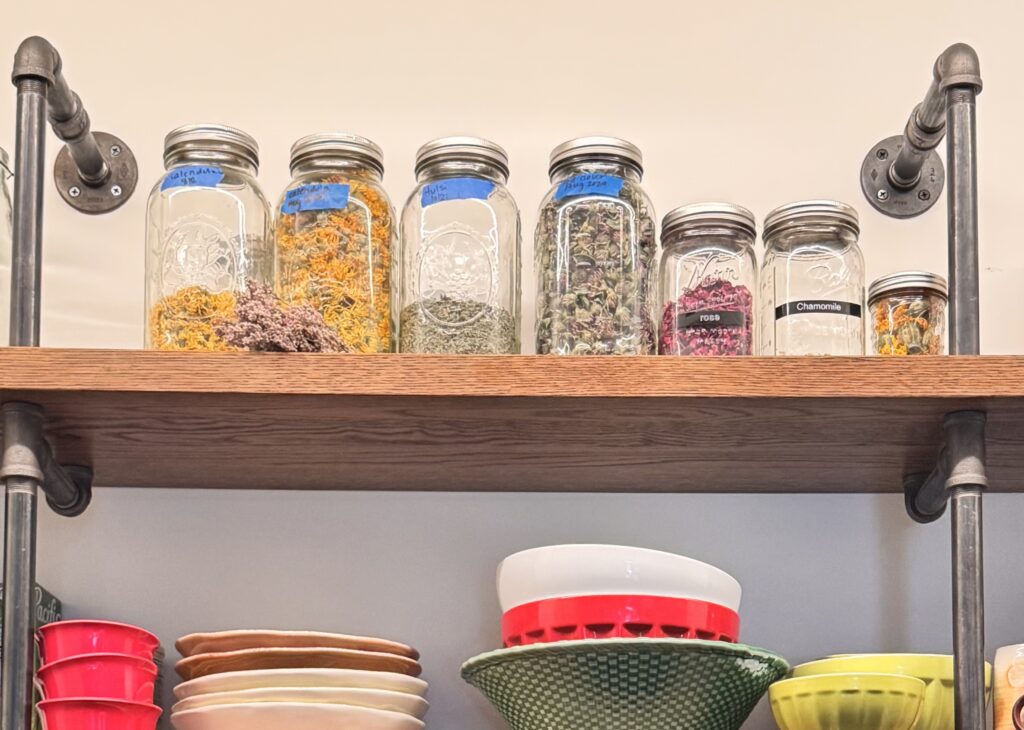
I have several large jars of herbs that Emery collected from her garden on my shelf, all marked with the contents and the date collected in her handwriting, using blue painter’s tape. The most recent one was collected in October 2024. The lineup of jars is beautiful in its variety of colors and textures, and although they are meant to be steeped in water and used in teas for healing or comfort, I will never make tea out of their contents. Instead, I look at the jars in their prominent position in my kitchen and often stop to open them and inhale their scents, but I don’t use their contents. I don’t want them to run out. They have become another way I’m honoring my daughter’s passions. Another way I am holding on. It feels like I’m inhaling a bit of Emery when I open the jars to take in their bouquet, provoking memories of walking through her gardens with her as she gathered herbs and flowers into a basket. Emery had a scent that she loved to wear, but her true scent didn’t come from a bottle. She smelled like the earth. Like lemon balm, anise, chamomile, and sweaty children. Emery smelled like life to me.

Jars of herbs, photos, stones, trinkets, and a river-rock paperweight painted like a ladybug she made in grade school, are among the many items that have become physical stand-ins for memories that are gathering organically in my home.

After Emery died, I helped two of her dearest friends clear her things out of the bathroom. I brought a box of her toiletries home—shampoos, lotions, moisturizers, perfume oils, and other bottles she dipped into on a daily basis. I used the products with care and love until I realized they would soon be gone, then added “sparingly” to my routine. Her bottles of product became tangible items when she wasn’t. What will happen when they become empty bottles? I can buy these products when hers run out, but will they hold the same value without the significance of having once been hers?

In my mind of magical thinking, I’m gathering pieces of her and bringing her back, one dried flower, one piece of rose quartz, one inhale of her herbs at a time. If I gather enough of her things, can I piece her back together again? Bring her back to me? Grief is the gateway to pondering the impossible and things you know will never happen, yet I keep doing it. I used to call Dad’s and Emery’s phones until they were no longer in service, knowing they wouldn’t answer, but what if, in my magical realm of thinking, they did?

Several months after Emery died, I had her daughter, Muna, over for a sleepover. She hadn’t spent the night by herself and was very excited, arriving with a backpack loaded with enough clothes and “had to bring it” items to last several nights. Miles told me she sometimes woke up in the middle of the night, crying out for her Mama, and that he would be sure to have his phone on just in case. I wasn’t sure what to expect, but I was ready. She headed up the steps to my room as if on a mission and said she would be “getting her things sorted out” and would be down in a minute. I went up to check on her a few minutes later, and she had taken all the miscellaneous bottles, headbands, combs, and her toothbrush from her toiletry bag and lined them up neatly on my bathroom counter. “Look, Laudie, it’s like I live here! With you!” She had settled in nicely. I looked at the items that came out of Emery’s pink satin toiletry bag that were organized on my bathroom counter—items of Emery’s that were given to her on the day of the bathroom clean—out: lipstick, eyeshadow, lotions, and creams. It reminded me of Emery when she was the same age, and I had taken her on a trip to visit one of my sisters. Toiletry items lined up in anticipation gave me comfort in their familiarity.

Later that night, Muna cried out, and I woke up, ready to comfort her, but she immediately fell back asleep. The light of the moon coming in through a window illuminated her face, and in my half-asleep state, I thought she was Emery. Her hair, her smell, and the way she held Sims, the stuffed dog that was once Emery’s, were Emery. It took me a moment to realize it was my granddaughter, not my daughter, lying next to me. I took in the beauty and innocence of the 5-year-old girl, who lay beside me, both of us suffering the unfathomable loss of a daughter and a mother. It hit me in that moment that the love Muna has for her Mama and the love I have for my daughter will always be intertwined in the love we share for each other. She will be my link to my daughter, and I will be her link to her Mama. The moment took my breath away. When she lay back down, it was like Emery had done as a child, with her head not on the pillow, but butted up next to it. I had stepped back in time for a moment, and five-year-old Emery and I were having a sleepover. Muna looks like Emery and shares her compassion, empathy, and strong will, and I often call her Emery out of habit. It will be the ache and the gift she will always carry.

The next morning, Muna put on a headband that I remembered Emery wearing. The pride with which she wore the much-too-big pink band, perched awkwardly at her hairline, made it even more beautiful. Emery’s things, spread out over three generations, both of us using and wearing them with deep love and pride, but for me, with the fear of them running out.

Last fall, I was in Kansas City with Thomas and Grant for the launch of the foundation they founded with Emery. I was wearing a pair of her shoes she had given me, which, after several wearings, she decided were too big. I wore them because they looked good with my outfit, but while I was being introduced throughout the evening as Emery, Thomas, and Grant’s Mom, I realized that wearing Emery’s shoes went far deeper than looking cute with the pants I had on. I was metaphorically and physically in her shoes, and I couldn’t help but smile with pride at the realization. At one point, I told one of the board members who was especially fond of Emery that I was wearing her shoes. She looked down at the clunky, black fisherman sandals, smiled and said, “I’m guessing there was a time when Emery would wear your shoes, as a little girl, and now it’s your time to wear hers. She’d be so proud of you.” And like Dorothy’s red shoes, the shoes I was wearing had a power I hadn’t expected.

When we were going through Emery’s things last summer, I noticed one of my Dad’s cards that he kept in his walker to give to people he met at his retirement home. They represented Dad so well that they were handed out at his celebration of life. It was propped up against a large piece of rose quartz on the nightstand next to Emery’s bed. I was touched to see the prominent place she had placed the card, knowing she read the words every night before sleep. The card said, Life isn’t about waiting for the storm to pass. It’s about learning to dance in the rain. We’re all trying to find out dance steps in the rain without falling, Dad.

The purse that Emery “borrowed” a dozen or so years ago is back in my possession, and it made me happy that she had a few of Dad’s cards in it, along with a Photo Booth photo of Muna and me and a few parking tickets. It was the purse she had carried up until a few days before she died, and after seeing it for so many years on her shoulder, it feels good to be back on mine. Pieces of Emery. On my shoulder, on my wrists, on my face, on my body. The tangibles when she is no longer.

A few days after Emery died, I noticed that Muna was wearing one of Emery’s hair clips in her hair. The oversized clip in her fine curls, a combination of vulnerability and love, had me holding back tears. At one point, she took it out and asked me to hold onto it for her. I told her I would, then before she left the room, she came back to me and in a very quiet, secret-like voice, said,
“Be very careful with it, Laudie; it was Mama’s, and I don’t want anything to happen to it.”

I took the clip from her, receiving it from her small hand to mine, like a delicate flower. I held it for a while, then, rather than setting it down, I put it in my hair, checking first for loose hairs, almost instinctually. I wondered when it was last in Emery’s hair.

I’m holding onto the relics of memory I can touch, wear on my body, or take in through their scent, and am comforted in their familiarity. Pieces of Emery.

The sweaters.

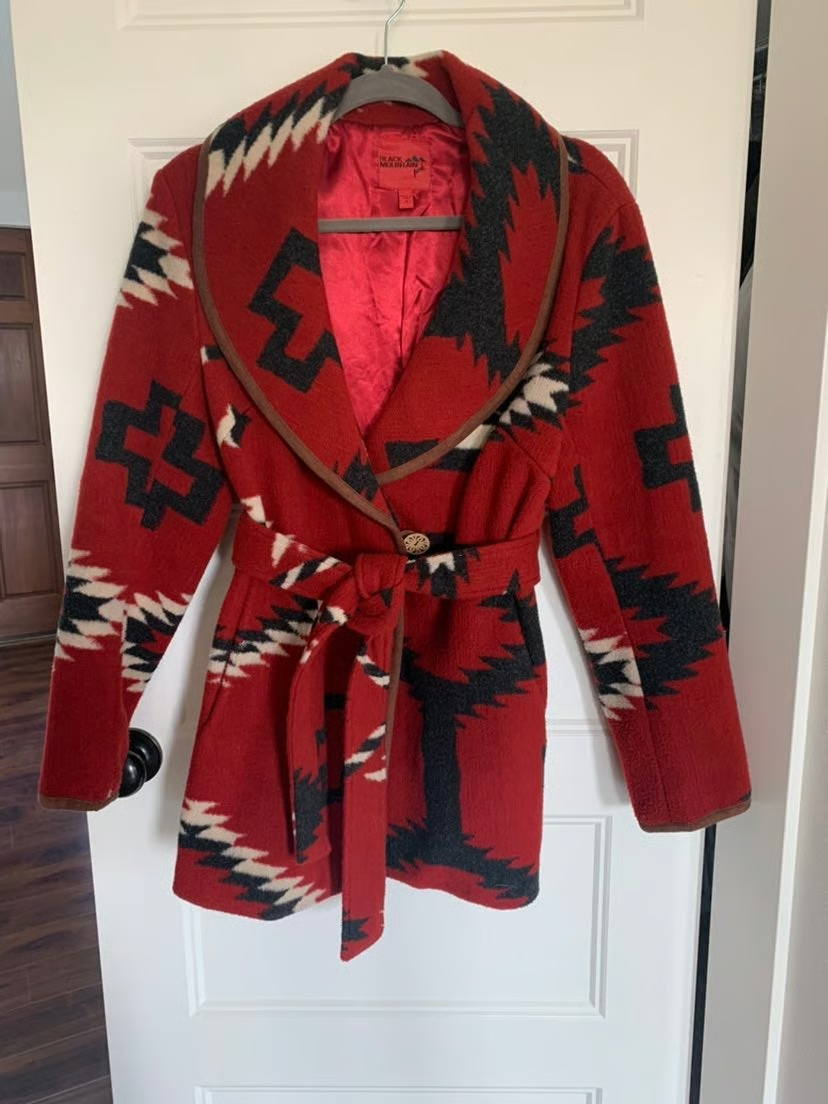
Not my sweater, or its replacement, but very similar.

When I first moved into my home in Boulder, I didn’t have a closet. Specifically, I didn’t have a closet for my clothes (or my coats, but that’s another story). I had a room, but the shelves and racks hadn’t been installed. My contractor got me temporary hanging racks so I could at least get my clothes off the floor and onto hangers.

My sisters were in town to help me get settled after my move, and on their last day, we tackled my clothes. A very pregnant Emery, her husband, Miles, and their 2-year-old son, Arlo, were also there to help, although Arlo was mostly there for our entertainment as he wasn’t interested in the task at hand. I was grateful to have Miles around as the racks arrived unassembled, and I have little patience or aptitude for putting things together. While Miles assembled the racks, Emery and my sisters unboxed and hung my clothes in assembly line fashion. An impromptu closet clean-out began because I couldn’t put large piles of clothes in front of my daughter and sisters without them forming a giveaway pile and a save pile, whether I liked it or not. Before an item was hung, it was held up before the group, and responses such as “absolutely,” “sure,” or “seriously?” were shouted out. Humbling, yet efficient.

While all of this was going on, two-year-old Arlo was helping himself to the box of Halloween costumes my children had worn, parading through the room as a tiger, a bumblebee, and a magician; a nice distraction from all the enthusiasm my sisters and daughters had for my ill-chosen clothing items. The giveaway pile was growing, alongside my irritation.

After a few hours, everything that had been saved was hung, and sweaters were returned to the boxes they had been packed in because I still didn’t have drawers or shelves yet. It was late August. I was still a few months away from sweater weather.

The following morning, after taking my sisters to the airport, I dropped the large box of giveaways off at the local Goodwill and returned home to organize what was left of my clothes. I couldn’t find the box of sweaters, but instead, found a box of giveaways, and knew immediately what had happened. I immediately drove to Goodwill, hoping to retrieve the box of sweaters that I had inadvertently given away. The manager, a kind and empathetic man, told me my box was already on its way to another Goodwill somewhere in Denver, because they were a distribution center. I was surprised that anything could happen that quickly, so I did some searching in the store on my own, but had no luck.

I was devastated. My carefully curated box of at least a dozen sweaters, collected over many years, was gone. I called Emery, as I often did in a crisis, because she was both a voice of reason and a source of comfort. I also knew that, given her love of clothes, she would understand my distress. Her initial response surprised me.


“Well, that sucks, Mom, but just think how happy it will make someone to find your beautiful sweaters! You’re really going to make someone’s day… or several people’s.”


There was a little too much lilt in her voice. I tried to shift gears to her line of thinking, but I wasn’t ready.


I added, “The cashmere sweaters, Emery…”
“And that will make the finders even happier, Mom.”
“The vintage Ralph Lauren blanket sweater was also in the box.”
There was an audible gasp. Her tone shifted.
“Oh no… not the vintage Ralph Lauren!”
“I’m afraid so.”


Now she understood. The cashmere sweaters could easily be replaced, but the Ralph Lauren sweater had been in my closet for over 35 years and remained one of my favorite pieces. We commiserated over the phone, knowing there was nothing we could do. What Emery was good at, and what I struggled with, was letting go, and I knew she was right. Someone (or several people) would be very excited with their finds. I had to let it go. I had to move on.

A few days later, to celebrate my birthday, Emery and I walked to the shopping area in Boulder, a few blocks from my house. She told me she wanted to start replenishing my sweater collection for my birthday. Three sweater purchases later, we ended my birthday celebration with lunch in one of our favorite restaurants. It was one of my most memorable shopping days with Emery because of her enthusiasm for replenishing my sweater inventory while understanding how upset I was. I still have the three sweaters, even though she told me a few years later that maybe it was time to donate at least one of them, as they had seen better days. She was right, but I hung onto all three, not necessarily because I still loved them, but because I loved the history of their purchase.

That Christmas, Emery gave me a Ralph Lauren sweater. She hadn’t found my sweater at Goodwill, but found its near twin on eBay, and it was more beautiful than the one I had owned because of its journey to me.

Emery was continually teaching me how to let go of things that didn’t really matter and to hold on to those that did, but I was a tough student. I returned to Goodwill multiple times, hoping I had been told wrong and that my box of carefully curated sweaters hadn’t left Boulder after all, and that I would be able to find them on the racks and rebuy them for a small price. I never found the sweaters, nor did I ever tell Emery about my continued search, although of course she knew I had searched, because she knew me. Eventually, I stopped looking and shifted to what Emery had told me. “Just think of how happy it will make someone to find your beautiful sweaters.”

There was a generosity of spirit that came naturally to Emery, and one that I continue to learn from. I may not be so quick to see the altruistic side of a situation, but in her memory, my daughter has me looking much harder than I used to.

The empty chair.

We had just been seated, deciding what was what in the stack of small, folded menus on the table, when Thomas said, “When we are out together, the three of us, there will always be an empty chair.”

I was in a restaurant with my two sons the night before Thanksgiving at a restaurant in Portland, where my daughter-in-law had snagged a hard-to-get reservation. Over the past several months, I had been at many tables in restaurants in many different cities with Thomas and Grant, but had never noticed the empty chair. Thomas’s words hit me hard in their reality, but he was right. When the three of us are together, there will always be an empty seat because tables are two-, four-, or six-tops, but never three-tops. The reminder of Emery’s absence is continual and shows up in places I never would have thought of before.

I sat down with my family for every dinner while we all stayed at the rental house in Boulder after Emery’s death. I remember during one of the first dinners, it didn’t seem like there were enough of us at the table. I had a sense of needing to wait because we weren’t all there. The one who showed up in the memorable outfit, whose small hands wore the biggest rings, who would have special teas for all of us after the meals, that she had blended to help with digestion, wasn’t there. There wasn’t an empty chair at that round table, but the emptiness was profound. I didn’t understand then that that feeling of someone missing would weave its way in and out of everyday. It’s a sensation of deep longing and searching, even though I know the reality.


The last time I had been out to dinner with all three of my children was on September 8th, 2024, the day after my Dad died, and they had flown into Kansas City from three different states We went to a nearby restaurant and were seated at a four-top table that evening. There was no empty chair. As my tears flowed with my accounts of my Dad and their grandpas’s last days, Thomas and Grant, who were seated across from me, would reach out and take my hand or my arm, and Emery, who was seated next to me, would lean in to hug me. We were whole. The seats were filled, and we supported each other in our grief. The empty chair now stands in the starkness of loss. I thought about how different it was, just the three of us in the restaurant in Portland, holding each other up emotionally because our fourth is missing. We will always be navigating the space we live in without Emery, moving on instinct, as there is no script or map for the journey we are on.

It’s a slow drip when someone dies, and reminders are ever-present. My phone auto-corrects morning to mourning. My favorites still appear on the screen in my car when I make a call. Two of the phone numbers are no longer in service, the oldest ones and the youngest: Dad and Emery. I can’t bear to remove them. I’ve been asked multiple times while at doctor appointments, “Is Emery Golson still your emergency contact?” In the early days, I simply answered yes, as no felt like too big an answer. My saying yes is now on a case-by-case basis, depending on my emotional strength that day. Sometimes, the efficiency of the person behind the desk who deletes Emery Golson and enters another name feels too insensitive, even though I haven’t told them why, and they are simply doing their job. I randomly get emails to my email address that begin with “Dear Emery.” They are junk emails, soliciting money, but I can’t bear to unsubscribe from them. I’m afraid to delete anything with Emery’s name on it. I’m holding onto every piece, every shred, every fiber of her that I can.

Empty has shown itself in so many ways this past year, besides the chair. Shortly before Mother’s Day, I told one of my sons that I was no longer a mother in Boulder, so it would be difficult to spend the holiday there. They told me that wasn’t at all true, as I was a mother everywhere. I knew they were right, but in the physical sense, I was not a mother to anyone in the town where I live. It felt similar to being asked how many children I have. I’ve never hesitated with the three, but don’t always share more unless asked; when I do, it’s still three, but I have to add that one is no longer living. It’s a hard sentence to say and a hard one to hear.

Experience has shown me the consequential difference between using adjectives and verbs with my daughter. Death as an adjective feels too final, too abrupt. “Emery is dead.” The verb “Emery died” is softer, gentler. It is what she did, and not who she is or became, and although it’s only semantics, the difference matters greatly to me.

In the early days after Emery died, Grant told me he often misspelled ‘siblings’ when writing emails to Emery and Thomas. He said that Thomas would correct him, reminding him that ‘siblings’ had one b, not two, but for some reason, he couldn’t remember. He told me he had recently written an email mentioning his siblings, and this time he paused over the word, remembering that ‘siblings’ has only one b. He told me it would be easier to remember now, since he had only one sibling. That hit me in the same way the empty chair would months later. One sibling, one empty chair. The void of that empty space is far larger than the chair or letting go of the extra b in siblings. It’s love. It’s remembering. It’s about making a shift in everything we know and finding Emery’s presence so profoundly in her absence.

A few days after Emery died, the family gathered at Miles’s house to celebrate his birthday. I hadn’t been in the house since the night Emery was taken to the hospital. As I opened the back door, the emotions of the night and seeing the EMTs carry her down the stairs on a stretcher felt like I was living the moment all over again. I had been worried about seeing her shoes at the door because Emery’s shoes were always at the back door, as they didn’t wear shoes in their home. Shoes hold an emotional weight and vulnerability, amplified after death. I knew that seeing Emery’s shoes at the door would no longer be about a momentary pause, but instead, would represent a journey that had ended; treads that would no longer move across the ground with her energy.

Thankfully, Miles had moved Emery’s shoes, but in their absence, I wondered where they were and felt an overpowering need to see them, to try them on, even though her feet were one size smaller than mine. This would become a pattern for me that still exists a year later. I don’t avoid the pain or ignore it; I want to sit with it, put it on, walk in it. Her cowboy hat, however, still hung above where her shoes would have been. I touched the rim as I walked past it, but resisted putting it on my head.

Ten months later, I’d be in Portland for the 3rd or 4th time in a year. It was the day after my dinner out with my sons, and we were all seated around the table for Thanksgiving dinner. There was no empty chair, but there was an empty spot at the end of the table directly across from where I was seated. I acknowledged the spot as we went around the table, one by one, and shared what we were thankful for, a hard task in a year that has been so painful. And yet, there seemed to be more gratitude at that table than I remember in past years. We all felt Emery’s energy at the table, shifting our emotions from grief to gratitude, from sadness to love. I’ve slowly begun to reframe the empty chair. There may be a physical vacancy, but love and gratitude have filled in the space emotionally, and I’ve become acutely aware of Emery’s presence in her absence.