
Christmas anticipation…

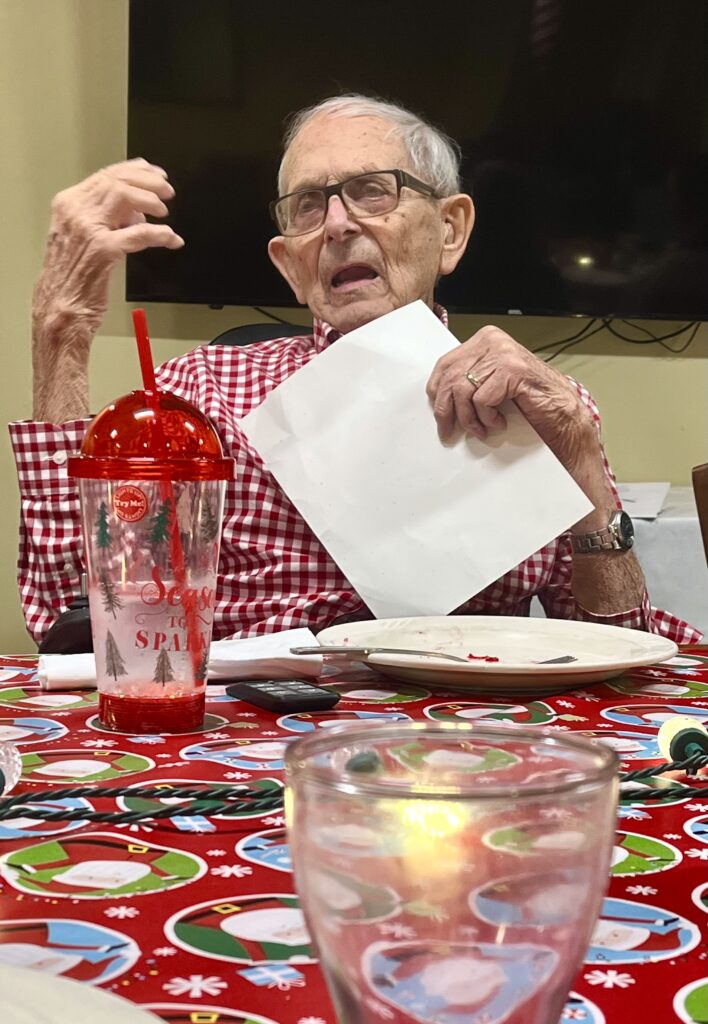
Dad, holding court with the family on Christmas, as Dad so often did, 2023

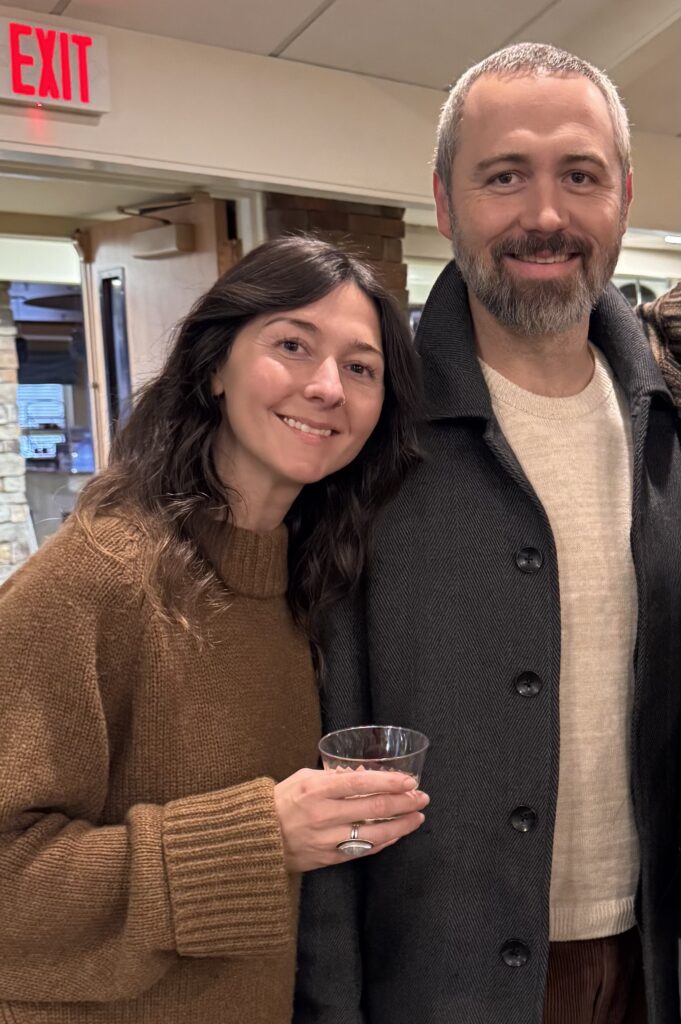
Emery and Thomas, Christmas, 2024

My thoughts on Christmas this year are to get through it.  Get through the holiday that I usually look forward to, starting on the day after Thanksgiving, when I haul the red and green boxes in from the garage while trying to remember what goes where. There is always a sense of relief when the empty ornament and decor boxes are back in the garage, the task completed, and for the next month or so, my house is transformed.  The joy.  A dark room at night with a lit tree.  I love Christmas and have decorated for the holiday since my first apartment, when I was in college. I’m not looking forward to Christmas or the ten days that follow. I didn’t haul the boxes out of the garage or put up a tree this year. I want it to be over, and it hasn’t even begun. On the heels of Christmas is New Year’s, when the nightmare I’ve been living for almost a year began. I have a lot of dates coming up that I need to get through.

A few weeks ago, I went to get a Christmas tree with my son, Thomas, and his family while I was in Portland.  While I was watching the employee tie the tree onto the top of the car, a particular memory came to mind; one I hadn’t anticipated, nor was I ready for it.  I held back my sobs, trying my best to participate with enthusiasm in what should have been a fun outing with Thomas and his family. I recalled the first Christmas in the house that my family now refers to as the divorce house. It came with its challenges, starting with the Christmas tree.  Picking out the tree had always been something we did as a family, whether it was cutting one down or buying one in a lot. I knew it wouldn’t have the same festive feel that year as it had in the past; I just wanted a tree: no fanfare, no hot chocolate and carolers, just a tree. Emery and I had been at Home Depot and decided, for efficiency, to get our tree there.  It was bitterly cold, and we had had a day of snow and ice, so the tree was chosen quickly, without comparing it to other trees that might have had a better shape. I wanted to check the chore off the list and get out of the cold.  After I paid for the tree, I asked the cashier where I should park so the tree could be secured to my car.  

“We don’t do that,” the cashier told me. “For insurance reasons. The customer is responsible for attaching the tree themselves.”
“Me? You mean I was supposed to bring rope?”
“Well, I suppose we could give you some rope.”
I was waiting for the “but maybe we can make an acceptation for you and is this your daughter?”

It didn’t come. She wasn’t going to help this newly single woman and her daughter in Christmas tree distress.  It was close to closing time, and I could sense her anticipation of clocking out and going home. 

The tree was too big to fit in the car, but Emery and I dragged it there, not exactly knowing what we would do with it once we got there. Luckily for both of us, we saw an employee who looked to be high school-aged, standing around, trying to look busy. I flagged him down and begged him to help us.  He was quick to say he couldn’t and started in on the insurance issues. I told him I’d tip him.   A lot.  I had no idea what that meant, but it got him moving, but not before he looked around to see if anyone was watching.  He told me he’d be right back with some rope.  And for twenty dollars, or maybe it was more, I don’t remember, he secured the tree while Emery and I waited inside the warm car.  The young man had no idea of the heroic gesture he had just made, and I have thought about him every year since, when buying my tree. The following year, I started the tradition of going to the places with the carolers, hot chocolate, and men who would load your tree and wish you a Merry Christmas when they were done.

Once home, Emery and I dragged the tree inside, only to realize that the back half of it was covered in ice.  Why hadn’t we noticed the ice when we selected the tree? Or when it was being secured to the car? Perhaps because Emery and I were warming up in the car, likely listening to Celine Dion’s Christmas CD, while the ice-laden tree was being tied on.  This realization wouldn’t come until the tree was in the living room, melting on the new hardwood floors.  I looked at Emery, and we both shrugged and shook our heads, not sure whether we should laugh or cry.

“Beach towels?” Emery asked.
“Yeah, beach towels, because we can’t put it in the garage because it’s too cold out there and the ice will never melt.”

And so, with a pile of beach towels circling the tree like a tree skirt to absorb the melting ice, we set the mess aside, roasted Brussel sprouts, and settled in for the Gilmore Girls because that’s what we often did in the evening.  The tree eventually melted and was decorated, and life moved on. A few weeks later, after all the presents had been opened, I found a wooden crate containing three bottles of barbecue sauce that looked like it had been hidden under the tree. I asked my family and the workers who were still finishing up some projects in my house about the crate, but no one knew where it had come from. Someone, I don’t know who, gave me an untagged gift of spicy kindness that Christmas, and I still wonder who it was. Because I’m not a big BBQ sauce fan, I gave the sauce trio away, but kept the heartwarming feeling of someone’s quiet generosity.

Christmas, 2024, was the last time I had a face-to-face conversation with Emery.  The next day, she was struggling with the flu, along with the rest of her family.  I went to her house a few times to bring food, but she insisted I stay away as she was afraid I’d catch what they were all struggling with. The first thing she said to me at our gathering at Mom’s retirement place on Christmas evening was,

“No one told me I looked prettier than a hundred-dollar bill, Mom.”
“No one told me either, sweetheart.”

My Dad had three girls, two granddaughters, and one wife. He loved complimenting his girls, and from a very young age, whether or not we deserved it, Dad’s way of telling us we looked nice was to say we looked “prettier than a 100-dollar bill!” The irony being, I doubt Dad had seen many hundred-dollar bills in his lifetime; still, it was his gold standard, and his compliments were always appreciated.  It was our first Christmas without Dad—our first Christmas of not being compared to a hundred-dollar bill. Then Emery told me that she had had a dream about Gramps the night before.
“He came to me in my dream, and I told him I felt bad because Christmas was the next day, and I hadn’t bought any gifts. He told me I had all the gifts I needed. I looked down and saw I was wearing a red coat with big pockets. He told me to look in the pockets, and I’d find everything I needed. And he was right, Mom, everything was in the pockets of the coat.”

I’ve thought about the dream and the red coat with everything she needed in the pockets. Emery often had relatives who had passed come to her in dreams, so this wasn’t unusual, but I can’t help but think Dad may have really been with her.  Ten days later, I think it was my Dad, her Gramps, who helped her cross over. Emery’s dream about Dad feels like a gift to me now, given that it was our last conversation of significance. It was honest and weighty, with an almost poetic quality.

Before we said our goodbyes at Mom’s, I pulled Emery aside and said,
“I think you look prettier than a hundred-dollar bill, Emery.”
She smiled and said,
“You do too, Mom.”
I knew she was missing her Gramps, and corny as it was, we both missed being compared to a hundred-dollar bill.

Thanks for taking care of my girl, Dad.  She really was as pretty as a hundred-dollar bill and even prettier on Christmas

Despite the joy and the beauty of twinkling lights, December has become a very heavy month for me. One day, one holiday, one anniversary at a time. I’m going slow.

The Comfort of a Road Trip

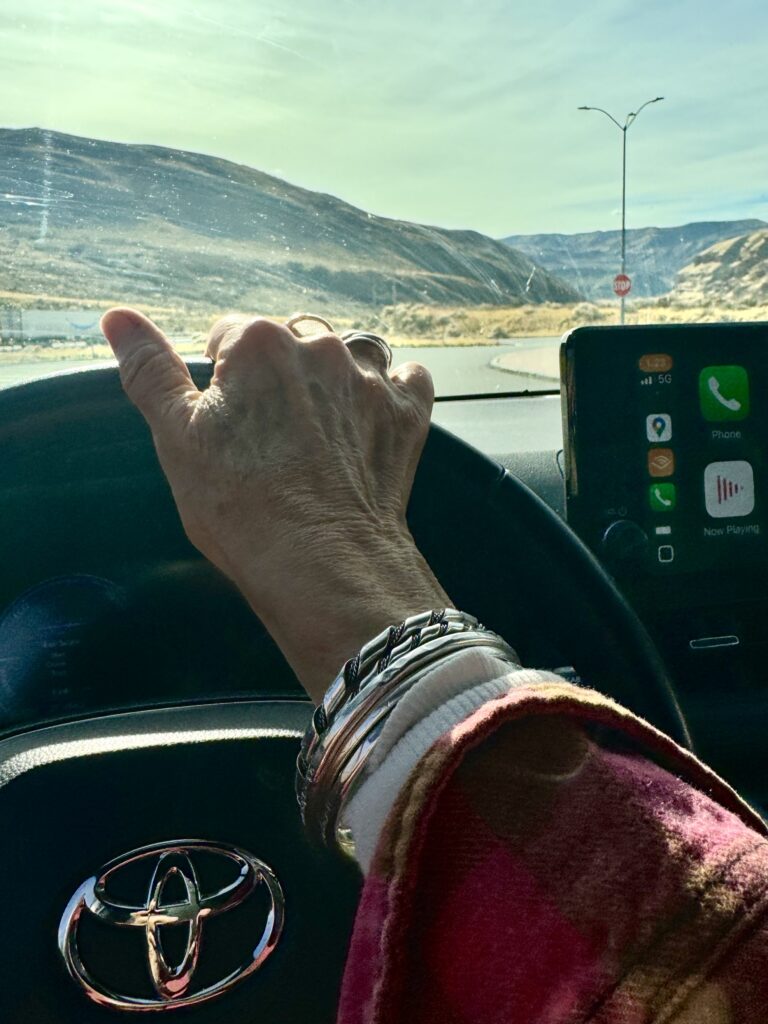
Somewhere in Wyoming or Idaho or Utah.. en route to Oregon.

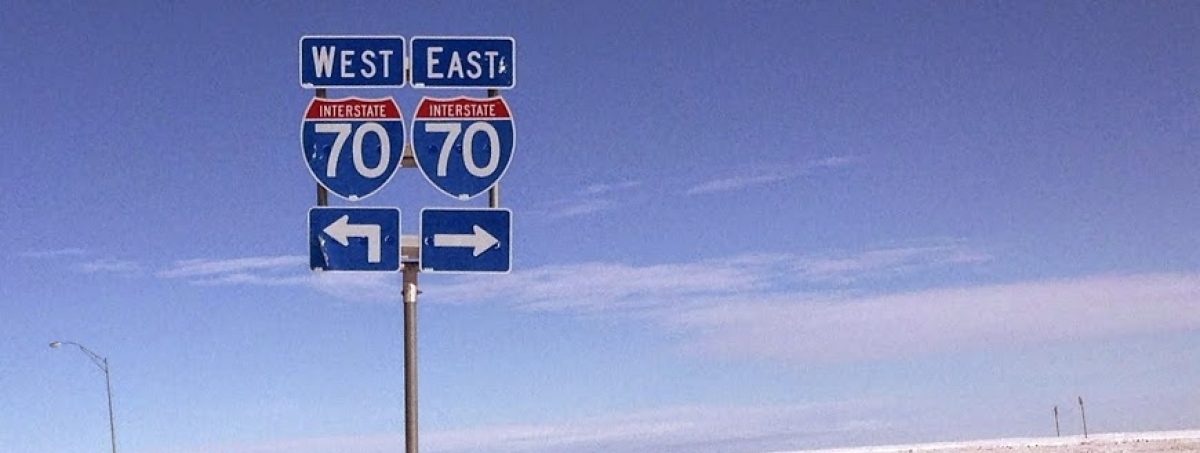
Somewhere between Boulder, Colorado, and Portland, Oregon, I began to understand why I love road trips, or, at this place in my life, why I need road trips. When I’m on the road, the space I’m in feels comforting to me; no longer the place where I came from, and not yet the place where I’m going. I’m nowhere. I’m in the liminal space of having left but not yet arrived. This threshold of uncertainty dawned on me somewhere in Idaho. Or was it Utah? I’m sure it wasn’t Wyoming because there were trees, and from my spot on I-80, Wyoming doesn’t look like it has any trees. I had just passed the exit for the town of Emery. Somewhere in Idaho, or maybe even Utah, there is a town named Emery. Several miles after passing the exit, I thought about turning around and going to Emery, but then I realized it was just another small town, and even though it held her name, I wouldn’t find her there.

This was my third time making the trip from Boulder to Portland, my 6th if you count my leaving and return trip as two. 1,200 miles each way, which amounts to two audiobooks, one night in Twin Falls, Idaho, each way, one small cooler, and a bag of snacks, plus unlimited stops for bathroom breaks, photos, and to purchase snacks because the ones I packed had lost their appeal. By the end of the year, I will have made 16th road trips, traveling to Kansas City, Los Angeles, and Portland from Boulder. I recently went to Massachusetts to see my sister, Susan, and my first thought was to drive. My service tech at my Toyota dealership asked me the last time I was in if I was now in the trucking business, given the miles I was putting on my car. I acted surprised and said, “Oh, really? Is it more than average?” “Yes. By a lot. I just hope you’re going to good places!”
I am because any place where my family is has become a good place (I’m lucky that they all happen to live in places I’d consider good, regardless of circumstances, though). I am escaping. I know that. By the end of the year, I will have been gone 227 days, away from Boulder to places that feel safer and gentler on my heart.

On the first day of my recent two-day drive to Portland, my route took me past the land several miles north of Fort Collins, where Emery and Miles built a small house on several acres. It was their piece of heaven, and it was beautiful, but 20 minutes from town, it became a thing after they had a baby, and after a few years, they moved to Boulder. The last two times I drove this route, I came to the road to their old house, slowed down, but kept going, and that was the right decision at the time. This time, however, I turned onto the aptly named Gratitude Lane and followed it to the top of the hill, where their small house came into view. Aware of privacy issues and the possibility of no-trespassing signs that I may not have seen, I chose not to venture any further, yet still had a full view of the house, the goat pen, and the beautiful land surrounding it. My mind traveled back to my many visits, where I’d stay in a small bedroom on the garage level. When Arlo was several months old, we’d both wake up early, and I’d get him out of his crib and hold him while we watched herds of deer cross the land. I’d tell Arlo stories and share plans I had with him for hikes we’d do together and places we could go. I remember one of those mornings, turning around to see Emery behind us, watching and smiling. The photo she took that morning remains one of my favorites.

I sat in my car, enveloped in the memories, and sobbed. Then, I did what I always do, and tucked the memory back into my heart where I had retrieved it, wiped my eyes, turned my car around, and left. I knew I’d pass the property again on my return trip, because that’s how you get from Boulder to Wyoming, then onto Idaho, Utah, and Oregon. I know that every time I pass the street sign for Gratitude Lane, my heart will feel heavy, and tears will fall, but the feeling of love will overpower the sadness. I’ve read that grief is love with nowhere to go. I think it’s more complex than that, but I love that the two always seem to be working in tandem.

I decided to treat myself to a nice dinner, or at least one that was not served in a bag, once I got to Twin Falls, Idaho, for the night. It was chilly out, but when I saw a fire pit on the patio of a promising-looking restaurant, I asked to be seated there. The hostess seemed surprised and told me there were tables available inside, but I insisted. I sat outside, alone, with a view of the Snake River, and was reminded of my journey to Sedona in June, when I stayed in Santa Fe and wrote a post about my dinner alone at the bar. That night felt like a lifetime ago. When the waitress came out with my wine, I asked her where I was. She told me Twin Falls, Idaho. I should have been more specific. I asked about the river that offered such a beautiful backdrop to my dining, my table for one, my patio for one. She told me it was the Snake River. I realized that in the comfortable womb of my car, I had passed such beautiful scenery, and often didn’t even know what state I was in. The next time I’m in Twin Falls, I’ll look for the Snake River and will have dinner at Elevations. The familiar will be a comfort.

No matter where I’m escaping to, I take myself and my grief with me, so it’s not really an escape at all, but for now, it feels right, and I feel safe, and safe feels good.

Life scares me right now, because I know how fast things can change. I feel nervous, on edge, waiting for the other shoe to drop when I’m already barefoot. I read that how you spend the first day of the new year is an indicator of how the year will go. On the day of 2025, in the afternoon, I sat on my couch, pen in hand, ready to fill my journal pages with expectations, dreams, hopes, and travel plans. And then I got a phone call from Miles. 911 had been called.

I am forever changed. My family is forever changed. We’ve found the glimmers of beauty— the micro joys amongst the macro grief, and that alone has been a tremendous gift. We have slowed down, become more discerning in our life choices, and found gratitude where it seemed impossible to exist. And I’ve found Emery. Her presence has been felt in the many signs she’s given me during my travels. A surprise rainbow when there was no rain, a small flock of birds that flew alongside me for several miles, a favorite song of hers that I heard while fueling my car, or a random photo of her showing up on my phone screen without a prompt.

I’ll be back in my car in a few days for the nine-hour drive to Kansas City, which, after a two-day drive to Portland, feels short. I will settle into the safe cocoon of my car, with a coffee in the cup holder and an hour or so of silence, because that’s how I like to begin. I’ll have a chat with Emery, shed some tears, sit in the quiet and feel her presence, then, when I feel ready, I’ll start a new audiobook or listen to a podcast. No longer in Boulder and not yet in Kansas City, I’ll sink into the liminal spot of having left but not yet arrived. The spot where I feel safe. The spot where I feel hope.

The Girl’s Got Style

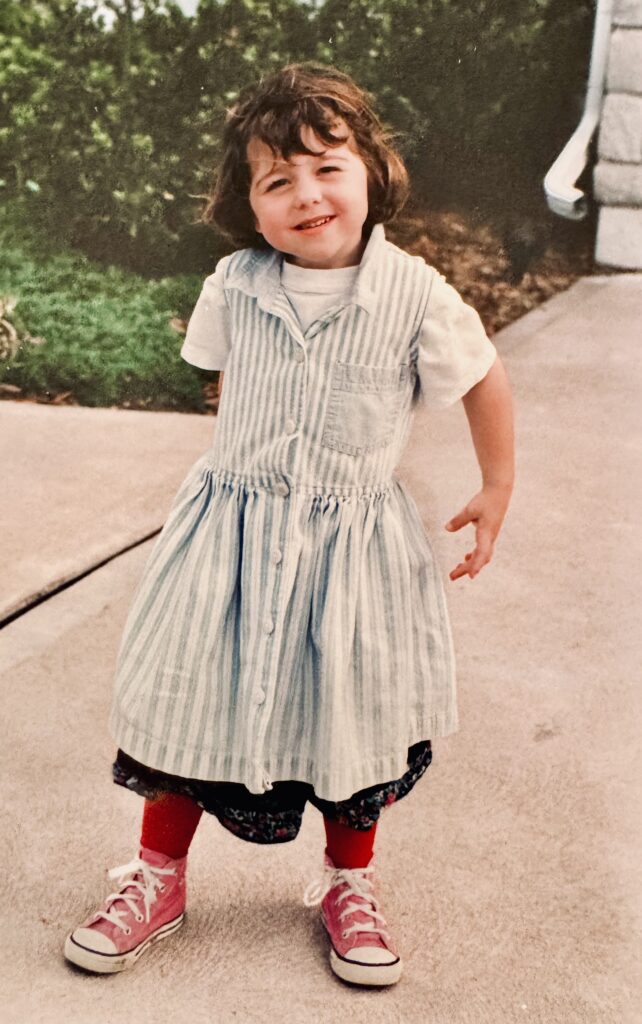
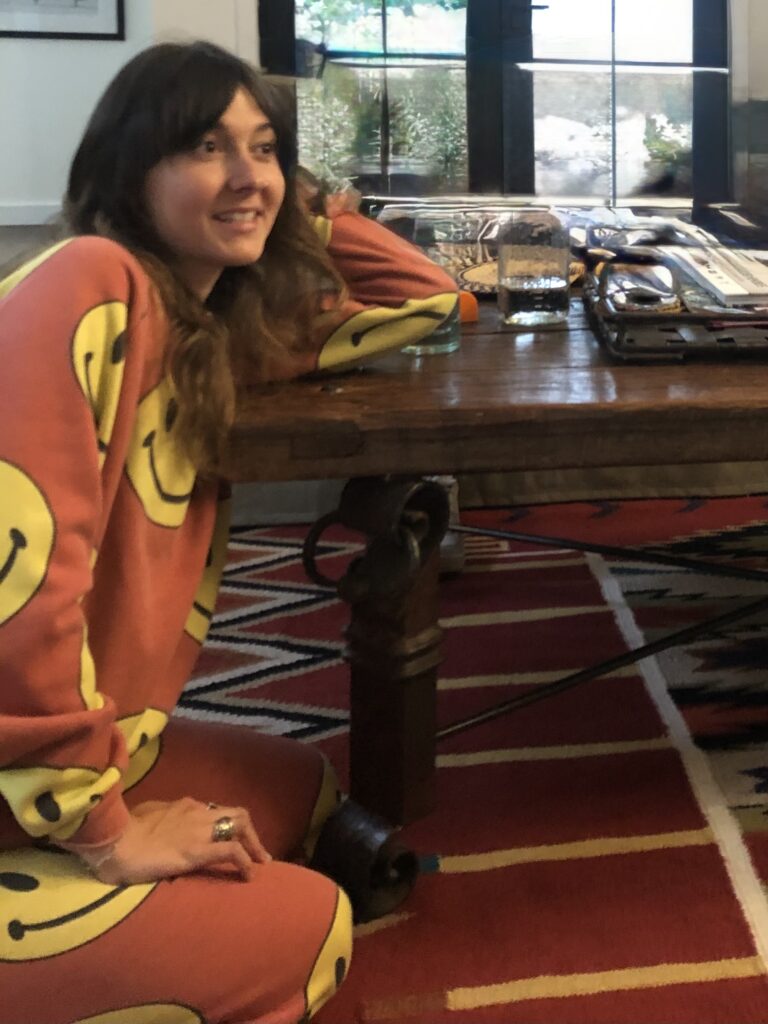
When you can’t decide, wear them all… a skirt, a dress, a shirt.

How can you not smile? I loved how my girl pushed the boundaries on her outfits.

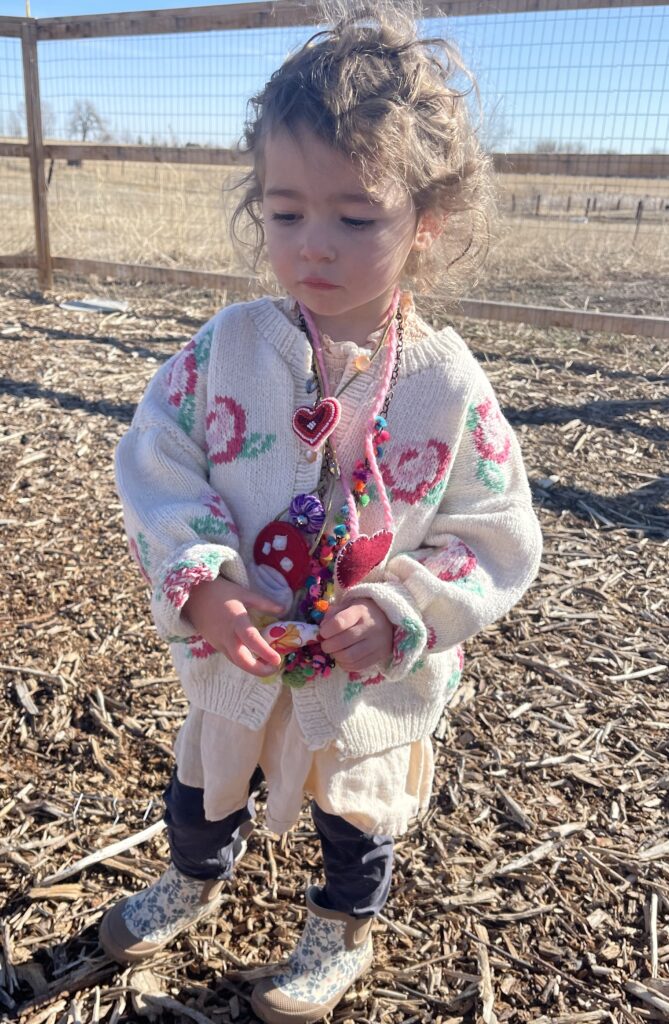
Muna, in a sweater that I knit for Emery 30 years ago, styled with heart necklaces. I see Emery’s style, her personality and her beauty, every time I look at Muna.

It was a windy spring day, at Kindergarten Roundup, when I learned that my darling Emery, at the tender age of five, did not wear underwear. Ever. While we were waiting outside the school for Kindergarten Roundup, talking with friends, a burst of wind caught her dress, revealing her underwear-free bottom. I couldn’t help but laugh, then quickly scanned the area for reassurance that there were no other witnesses besides my friend, Kate, and her son, who were waiting with us. I assumed it was the excitement of the day’s events that had caused her to forget her underwear that morning. I was wrong.

“I didn’t forget, Mama. It feels better this way.”

Kate, who also saw my bare-bottomed child, told me with a chuckle, “My Eric will never date your Emery!” The gift of her unbridled humor sealed the deal on our friendship that day, and we still laugh about it thirty years later.

After having two sons, I thought having a daughter would be easy. No more warnings about poking eyes out as my sons chased each other around the yard, with sticks as their swords. No more reminding them to quit taking clothes out of the clothes hamper to wear, regardless of how much they liked them, because they were dirty. No more insisting that they put their shirts on right side out with tags in back after repeated choruses of “Why does it matter?” A girl would be easier. Girls liked to braid hair, twirl in their dresses, put on fashion shows with their dolls, and drink pretend tea out of tiny cups. I had to rethink some of those assumptions while contemplating the naked little bottom under the sweet, blue, and white flowered dress…Because it feels better this way.

Before Emery started wearing the underwear that she would eventually stop wearing, I found a tiny pair of panties with roses on them when I went through her school diaper bag. She attended pre-school two days a week, and the teacher had parents leave a diaper bag with an extra set of clothes, underwear, diapers, or pull-ups, just in case. I asked her where the panties came from, and she told me she traded a pull-up for them.

“Katie has a bunch of sisters, Mama, so she’s got lots of pretty panties. I told her she probably needed more pull-ups.”

My daughter was a good negotiator and had definitely traded up. Whereas some parents used sweet treats to encourage potty training, I used tiny, flowered underwear. “You will have your own collection of pretty panties, without having to trade with Katie,” became my bargaining tool to get rid of the diapers, and it worked.


Emery’s style began to develop at a very early age. She knew exactly what she wanted and didn’t want to wear, without my help, thank you very much. Her strong opinions began in preschool, when I stopped trying to control what she wore and instead embraced her desire for independence and her need to showcase her creativity through her outfit choices. I was also tired of arguing. When dropping Emery off at preschool, I learned to ignore the side-eyed glances from the mothers whose daughters wore pastel dresses with matching tights and ribbons in their hair. In contrast, my daughter wore flowers with plaids, dresses over pants, and two dresses at once, all paired with red cowboy boots. I saw a lot of myself in her, but my interest in fashion and expressing myself in my clothing began in junior high, not preschool.

Emery was my third child in five years, and I let go of a lot due to exhaustion. However, I insisted on weather-appropriate winter clothing—coats, hats, and mittens. Emery’s daughter, Muna, is much like her Mama, but shoes are her thing, and she doesn’t want to wear them. The red cowboy boots were saved, and Emery and I both hoped Muna would love them, but she didn’t, because, regardless of how cute they were, they are shoes. Fortunately for her, students leave their shoes in cubbies outside of her classroom in Costa Rica. She’s able to go barefoot, which has been her preference since she was old enough to voice an opinion. Muna has her Mama’s decisive opinions regarding her clothing. The thread continues.

When Emery was in high school, I started using her strong fashion sense to my advantage and would ask her to help me with my closet clean-outs. The one thing I could always count on with Emery was honesty. There was no “That looks cute, Mom,” while her face indicated otherwise. Our sessions would end with a much leaner, more organized closet, along with a kick to my ego as the price of doing business, but I always appreciated her honesty.

“Are you sure this dress/skirt/jacket/pants/blouse is not a keeper?” I’d ask hopefully.


“To the pile, Mom. Well, unless you’re going for a Little House on the Prairie look, then, by all means, hang it back up.”

And without hesitation or sentimentality, my beloved Little House on the Prairie pieces would be heaped on a growing pile of What were you thinking?

I was learning a lot more than what was in style or out, what looked good, or what needed to be given away during those sessions. Emery, without knowing it, was teaching me about non-attachment and letting go; lessons that have stayed with me.

Shortly after I got divorced, Emery asked me if she could take me shopping, adding that when I started dating again, I might want a wardrobe refresh. Of course, her taking me shopping meant I paid for what she selected. Her strict terms included me not leaving the dressing room while she brought clothes for me to try on, even if I didn’t like them or thought they were not age-appropriate, unflattering, or didn’t fit my style or budget.


“Those are some strict parameters to follow, Em,” and before I could finish, she said,
“Are you in or not?”
“I’m in.”

Emery was 15. I was 50. I followed her rules, and after a few hours with me sitting in the Nordstrom dressing room and her bringing me items to try on, including a pair of jeans that she insisted I not look at the price, we had a successful day. I had a healthy start on a date-worthy wardrobe, including the jeans, and when I did sneak a look at the price, I wondered who in the world would pay that much for a pair. Well, me, it seems, and those over-priced jeans became my favorites, and I wore them until they became so thin I could no longer trust them when I sat down. My date-worthy wardrobe, much to Emery’s dismay, was primarily worn for evenings out with the girls, but when I did have a date, it was always Emery who dressed me.

It doesn’t seem that long ago that Emery sent me a video of three-year-old Muna, anxious to go outside early morning and play after a night of snow. She had her coat, hat, mittens, and boots on, but no pants; her bare bottom peeked out from the bottom of her jacket. In the video, Emery asked her where her pants were, and Muna responded, “I’m not wearing pants.”


Emery didn’t need to ask why, because her three-year-old self already knew.


Because it feels better this way.

Diagnosis: pneumonia and trauma

I understand how birthdays, anniversaries, and most recently Thanksgiving could become triggers for Emery’s death.  Maybe for a few years, or maybe forever.  I don’t know.  This morning, on the 11th month anniversary, another trigger, I went to Urgent Care with a throat that was on fire, and a lot of coughing. When the medical assistant put the oximeter on my finger, I started sobbing.   

I’m in Portland now, and my son and daughter-in-law both had commitments, but they told me they’d be happy to take me later in the day.  I’m used to doing things by myself (some would say to a fault), so I had no problem going alone.  I told them I’d be fine and just wanted some reassurance that it wasn’t anything serious that needed treatment.

When I started sobbing in the exam room, I wished I had waited for Thomas or Brooke to come with me, as I needed them. It was less about how I was feeling physically and more about the emotional side that could have used some shoring up. The mask they had me put on gave me a little cover, but the medical assistant sensed something was wrong. She asked me if I usually have a difficult time getting a reading on an oximeter, and I told her no and that earlier in the year, I had been using an oximeter multiple times a day and always got a reading quickly. I was referring to my family’s time in the rental house in January, where the oximeter sat on the kitchen counter and was used whenever we passed it. We were all scared. We now knew too much. I realized how odd my words must have sounded, so I clarified.

“My daughter died from pneumonia and influenza last January, so my family and I kind of became obsessed with taking our oxygen readings in the early days following her death.” 


It sucked the oxygen out of the room, literally, as she was struggling to get an oxygen reading.  I had not intended to share that with her, but I had to explain why I was sobbing, and it wasn’t because she couldn’t get an oxygen reading. She was stunned, offered her condolences, and after trying several fingers, she finally got a reading of 80, which is not a reading you want.  There was a time when I didn’t know that 80 was a bad reading or 68 (the reading Emery got that prompted the 911 call). That has all changed. I know what is good and what is acceptable now, and 80 is neither. She got another oximeter, and it registered 95.  Thomas later told me, after I shared my emotional experience with him, “We will all carry that trauma for a very long time, Mom.” He was right. The oximeters, influenza tests, and chest x-rays are far scarier than they should be.  Maybe they always will be.

Elizabeth, the nurse practitioner, came in and told me she heard me coughing from the lobby and wanted me to get a chest X-ray. I explained my tears, telling her that this was all very triggering to me – the chest X-ray, the pneumonia test, and the oximeter, because they all related so to my daughter’s cause of death. She sat down. She asked me what my daughter’s name was, then asked if I was Ok with sharing, as she wanted to hear what happened. I gave her a brief sketch of the timeline from January 1 to January 4. After hearing the story, she asked me how old Emery was and if she had children.

“Thirty-four and yes, two, ages 5 and 7 when she died.”

After she left the room and I waited for the test results, I noticed the boxes of blue surgical gloves hanging in a dispenser on the wall. They triggered a memory. We couldn’t enter Emery’s ICU room at St. Joseph’s without putting on a gown, a mask, and gloves first.  The gloves were also the same ones the nurse had used as a hair tie when, for the first time, I didn’t have one on my wrist.  She cut off the end and used it to pull Emery’s hair away from her face so it wouldn’t get tangled in the oxygen mask. I told her I was amazed at the skills nurses had, and she told me they have endless tricks up their sleeves.

I know my emotions were amplified, in part, because I wasn’t feeling well and because it was the 11-month anniversary.  Actually, I was feeling bad enough that for a moment, I thought about the irony of my dying on the same date that Emery died, a year later.  The death certificate would say pneumonia, but anyone reading it would know that it was really that big hole in my heart.  I couldn’t live with it anymore. Morbid?  Maybe.  But that is what free-wheeling in grief looks like.  There’s not much control.

I tested negative for COVID and influenza, but the chest X-ray was positive for pneumonia. I couldn’t help but think about how scared Emery must have been, given how scared I was, and then realized she wouldn’t have had the same framework I did.  She didn’t know yet that people really do die from the flu, even healthy 34-year-olds.

In my clinician’s notes under Family History, it said:

Has a history of losing her 34-year-old daughter to the flu. Patient reports experiencing triggers and sad emotions while being here in the clinic.

Emery’s death is now a part of my medical history. Then again, of course it is.

I feel like I’m carrying a sleeping bag full of bricks and so desperately want to set it down. Even though it’s been 11 months, I still don’t feel like I’ve gotten any better at carrying a load I didn’t want to be handed in the first place. Today, a few more bricks were added. The pneumonia is not helping.

Last night, I lay in bed, on my back because that was the most comfortable position I could find, and I felt a heaviness, like someone had set a few of my bricks on my chest. The nurse had told me that it would likely happen, but I had forgotten. It brought me back to Emery, before intubated, but with the oxygen mask, texting that her chest hurt and the pain was a seven. I felt like I wasn’t just trying to understand what she had gone through, but as her mom, I was crawling into bed next to her to experience it for myself, and she was helping me; my three on pain, her seven. It made me long for that girl in the bed, whom I was unable to comfort, short of telling her how much I loved her and that the medicine would start to help. I had no idea. Last night, I briefly journeyed into her pain with my own pain. It did not give me comfort. Instead, it connected me deeper to her experience and the helplessness I felt.

It’s an impossible burden as a mother to know there was nothing I could do to help my daughter.

Seasons of Grief

Not long ago, or maybe long ago, I’m not sure, as time is distorted to me now, I noticed large bins of pumpkins flanking the doors of my grocery store. I was confused. Had the mums already come and gone because they always come before the pumpkins, don’t they? I didn’t buy any, not even the small ones that I put in a wooden bowl on my kitchen table. I’m not sure why. Maybe the same reason I didn’t buy the mums, or why I didn’t purchase bedding plants this spring. It felt like too much work. Too much work for someone who, in previous years, filled large patio pots with flowers and ornamental grasses, then covered them once or twice in the early spring to protect them from the snow, because even after living in Boulder for six years, I still can’t seem to remember that Boulder still gets snow into April and sometimes May. Those same large pots are filled with the dead grasses and plants from last year, along with clumps of sedum from a nearby plant, whose seeds were graciously carried by the wind, adding a bit of color to the tangle of brown.

I have a small backyard landscaped with deep beds lining the perimeter and a flagstone path that cuts through the grass to a gate in the fence leading to the alley. It has been a source of pride and joy, and a lot of work that never felt like work to me.

Mid-summer, in 2024, I was sitting on my patio reading. The new renter to the guest house next door was on his porch talking on the phone. I could hear him, but not see him, as the branches of my peach tree kept me hidden. The guest house is above a garage, so he was looking down on my yard.
.
“I mean, seriously, you should see this yard and all the flowers in bloom. It’s incredible!”

It took me a minute to realize he was talking about my yard. I tucked in deeper into the branches of the tree to remain hidden and craned my head as close as I could get to the fence that separated our yards to hear more. I smiled with pride because he was right. My yard was incredible.

That renter is long gone and has been replaced by someone else, whom I haven’t overheard telling someone on the phone how beautiful my garden is. My garden isn’t beautiful this year. It’s overgrown and looks like the person who lives there has been away a lot because she has, and when she’s home, she doesn’t want to garden. She’s still trying to understand why.

I’ve not weeded or cut back my flowers, which are in the “leap” year of the “sleep, creep, leap” growth cycle, and leap they did. Small wild geranium plants that hugged the edge of my patio have formed knee-high mounds, covering the small plants planted next to them. I used to love gardening, but right now, in this time of my life, I don’t. Putting my hands in the dirt was one of the ways I tended to my soul. Now, in a year that my soul feels like it’s either on life support or cowering from exposure, I need to garden, but I can’t, and I don’t know why, except that gardening makes me sad. The only time I spend in my garden is to walk down the flagstone path, through my gate, and into the alley to take out my trash and after a season of doing nothing, all I see is work.

Before I reworked my backyard in 2021 and added a patio with a pergola, Emery and I would drag chairs to sit under the redbud tree. It was 2020. We sat six feet apart and wore masks. Or at least we tried to wear masks, but they never lasted long because we needed to see each other’s smiles. Emery usually had baby Muna on her lap, my 3rd grandchild, whom I couldn’t hold because of what we were still calling the “coronavirus.” Even at six feet apart, our conversation felt intimate, like we were curled next to each other on the couch. We were struggling with the isolation due to the virus, and Emery was overly cautious with me because most of the ones who were dying were in my age range.

I told her about my plans for the backyard — a patio with a pergola, and a table with a lot of chairs to accommodate gatherings of friends and family. She told me to skip the table, get more comfy chairs, and we could eat from our laps. We didn’t always agree. The following year, on Mother’s Day, my children, their spouses, and their children sat around my table under the pergola, enjoying a beautiful brunch. We had waited a long time to be together, and even though we were still under the threat of COVID, we made it work.

I wonder, when do memories just become memories and not triggers to a loss that still makes no sense and still leaves the stabbing pain that it did almost eleven months ago? Or does that ever happen? I wonder when I’ll be able to open the door to my back porch and not think of the morning of March 24th when the city of Boulder issued a stay-at-home order. I got a text from Emery saying she had left something on my back steps. She had left a small box comfort from local businesses near me, including teas and tinctures to help support my immune system and lungs. We worried about each other. We missed each other.

I recently rewatched The Gilmore Girls: A Year in the Life. And yes, at this point, it was like watching Steel Magnolias again. It brought back memories of Emery and me cozied up on my tooled-leather couch in Leawood, Kansas — the same couch that Emery had me write a contract for, which we both signed, stating that I would give it to her, and no one else, if I ever decided to part with it. I tucked it under the cushion for safekeeping. Three years later, when I moved to Boulder, I parted with the couch, but not before I checked with Emery, who said she didn’t have room for it. I watched two men carry it out of my house during my estate sale, remembering the contract hidden under the cushion, a buried treasure that likely shared space with hair ties, knitting stitch markers, and an assortment of coins. We sat on that couch and ate potato chips, French onion dip, store-bought cookies, and drank red wine. It felt recent, yet so long ago. Grief likes to get in there with memories and really messes things up when it comes to time. How was that nine years ago? How was it almost eleven months ago that Emery died? I often forget what month it is or even what season, even though the leaves are changing to oranges and reds in Boulder.

On a recent drive to the airport, I asked my driver (not concerned Kevin, whom I would meet on my ride home) what the large building project was that we had driven by. He told me it was high-density housing for CU students, then went in for a deeper explanation than I wanted to hear. I regretted asking the question. I started to ask him, simply out of politeness and boredom, if the students had returned to school yet. I caught myself. It was the middle of October.

Time is confusing and ever-changing. Two and a half days in January were longer than the nine and a half months that have followed. Memories wrapped in grief have taken over my calendar. Pumpkins replaced chrysanthemums that replaced bedding plants, and it still feels like I should be watching for March tulips to emerge from the soil. This grieving business is exhausting, yet oddly beautiful because of the love it represents. It’s like glitter. You think you’ve gotten it all cleaned up, then the sun reveals a sparkle, and you realize it will never be all cleaned up because it will never be gone.

Losing Emery has rearranged me—what I loved, where I found comfort, and the calendar of my life.

I forgot that I love to garden and that it has been healing for me in the past. Will I remember that I love decorating for Christmas when I see the greens flanking the doorway of my grocery store? Or will I walk into the store, whispering next year when I pass them, their scent following me into the produce section?